place

Palacio de la Autonomía

Buildings and structures in Mexico CityHistoric center of Mexico CityLandmarks in Mexico CityMuseums in Mexico CityNational Monuments of Mexico
Neoclassical architecture in MexicoPalaces in MexicoUniversity museums
PalacioAutonomiaDF
PalacioAutonomiaDF

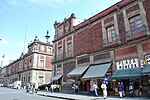
The Palacio de la Autonomía (Autonomy Palace) is a museum and site where the Universidad Nacional Autónoma de México gained autonomy from direct government control in 1929. The building is from the late 19th century, and located on the corner of Licenciado de Verdad and Rep de Guatemala streets, north of Santa Teresa la Antigua and east of Templo Mayor. The site has a 500-year history, starting from part of lands granted by Hernán Cortés. The current building was constructed by the administration of President Porfirio Díaz, but it was ceded to the University in 1910. Since that time, the building has had a number of uses, including housing a dental school and a preparatory school. Today it houses the Museo de la Autonomía Universitaria (University Autonomy Museum).

Excerpt from the Wikipedia article Palacio de la Autonomía (License: CC BY-SA 3.0, Authors, Images).

Palacio de la Autonomía
Calle Licenciado Francisco Primo de Verdad, Mexico City

Geographical coordinates (GPS) Address External links Nearby Places
placeShow on map

Wikipedia: Palacio de la AutonomíaContinue reading on Wikipedia

Geographical coordinates (GPS)

Latitude Longitude
N 19.434491666667 ° E -99.130636111111 °
placeShow on map

Address

Palacio de la Autonomía

Calle Licenciado Francisco Primo de Verdad 2
06060 Mexico City
Mexico
mapOpen on Google Maps

linkWikiData (Q7126319)
linkOpenStreetMap (371543641)

PalacioAutonomiaDF
PalacioAutonomiaDF
Share experience

Nearby Places

Massacre in the Great Temple of Tenochtitlan

The Massacre in the Great Temple, also called the Alvarado Massacre, was an event on May 22, 1520, in the Aztec capital Tenochtitlan during the Spanish conquest of Mexico, in which the celebration of the Feast of Toxcatl ended in a massacre of Aztec elites. While Hernán Cortés was in Tenochtitlan, he heard about other Spaniards arriving on the coast – Pánfilo de Narváez had come from Cuba with orders to arrest him – and Cortés was forced to leave the city to fight them. During his absence, Moctezuma asked deputy governor Pedro de Alvarado for permission to celebrate Toxcatl (an Aztec festivity in honor of Tezcatlipoca, one of their main gods, which, as popular in Aztec culture, included human sacrifice, in this case of a young man). But after the festivities had started, Alvarado interrupted the celebration, killing all the warriors and noblemen who were celebrating inside the Great Temple. The few who managed to escape the massacre by climbing over the walls informed the community of the Spaniards' atrocity.The Spanish version of the incident claims the conquistadors intervened to prevent a ritual of human sacrifice in the Templo Mayor; the Aztec version says the Spaniards were enticed into action by the gold the Aztecs were wearing, prompting an Aztec rebellion against the orders of Moctezuma. While differing so on Alvarado's specific motive, both accounts are in basic agreement that the celebrants were unarmed and that the massacre was without warning and unprovoked. The Aztecs were already antagonistic towards the Spaniards for being inside their city and for holding Moctezuma under house arrest. When Cortés and his men, including those who had come under Narváez, returned, the Aztecs began full scale hostilities against the Spaniards. The Spaniards had no choice but to retreat from the city, which they did on what is called the Sad Night (La Noche Triste), losing most of their men, who were either killed in the battle or were captured and sacrificed.