place

Santa Teresa la Antigua

1616 establishments in New Spain17th-century Roman Catholic church buildings in Mexico1863 disestablishments in Mexico1989 establishments in Mexico19th-century murals
AC with 0 elementsArt museums established in 1989Arts in Mexico CityCatholic Church in MexicoContemporary art galleries in MexicoHistoric center of Mexico CityMurals in MexicoMuseums in Mexico CityRoman Catholic churches completed in 1616Roman Catholic churches in Mexico CitySpanish Colonial architecture in Mexico
ExTeresaArteActualDF

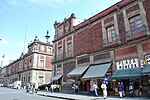
Santa Teresa la Antigua is a former convent located in the historic center of Mexico City on Licenciado Primo de Verdad #6 just northeast of the city's main plaza. The complex ceased to be a convent in the latter part of the 19th century and has housed the Santa Teresa la Antigua Alternative Art Center since 1989.

Excerpt from the Wikipedia article Santa Teresa la Antigua (License: CC BY-SA 3.0, Authors, Images).

Santa Teresa la Antigua
Calle Licenciado Francisco Primo de Verdad, Mexico City

Geographical coordinates (GPS) Address Website Nearby Places
placeShow on map

Wikipedia: Santa Teresa la AntiguaContinue reading on Wikipedia

Geographical coordinates (GPS)

Latitude Longitude
N 19.433855555556 ° E -99.130711111111 °
placeShow on map

Address

Ex Teresa Arte Actual (templo de santa teresa la antigua)

Calle Licenciado Francisco Primo de Verdad 8
06060 Mexico City
Mexico
mapOpen on Google Maps

Website
exteresa.bellasartes.gob.mx

linkVisit website

ExTeresaArteActualDF
Share experience

Nearby Places

Massacre in the Great Temple of Tenochtitlan

The Massacre in the Great Temple, also called the Alvarado Massacre, was an event on May 22, 1520, in the Aztec capital Tenochtitlan during the Spanish conquest of Mexico, in which the celebration of the Feast of Toxcatl ended in a massacre of Aztec elites. While Hernán Cortés was in Tenochtitlan, he heard about other Spaniards arriving on the coast – Pánfilo de Narváez had come from Cuba with orders to arrest him – and Cortés was forced to leave the city to fight them. During his absence, Moctezuma asked deputy governor Pedro de Alvarado for permission to celebrate Toxcatl (an Aztec festivity in honor of Tezcatlipoca, one of their main gods, which, as popular in Aztec culture, included human sacrifice, in this case of a young man). But after the festivities had started, Alvarado interrupted the celebration, killing all the warriors and noblemen who were celebrating inside the Great Temple. The few who managed to escape the massacre by climbing over the walls informed the community of the Spaniards' atrocity.The Spanish version of the incident claims the conquistadors intervened to prevent a ritual of human sacrifice in the Templo Mayor; the Aztec version says the Spaniards were enticed into action by the gold the Aztecs were wearing, prompting an Aztec rebellion against the orders of Moctezuma. While differing so on Alvarado's specific motive, both accounts are in basic agreement that the celebrants were unarmed and that the massacre was without warning and unprovoked. The Aztecs were already antagonistic towards the Spaniards for being inside their city and for holding Moctezuma under house arrest. When Cortés and his men, including those who had come under Narváez, returned, the Aztecs began full scale hostilities against the Spaniards. The Spaniards had no choice but to retreat from the city, which they did on what is called the Sad Night (La Noche Triste), losing most of their men, who were either killed in the battle or were captured and sacrificed.