place

Colonia Peralvillo

Cuauhtémoc, Mexico CityNeighborhoods in Mexico CityUse mdy dates from September 2014
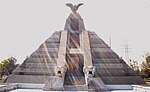
Misterio Calzada Misterios

Colonia Peralvillo is a colonia located in the Cuauhtémoc borough of Mexico City, just northwest of the city's historic center. It has been a poor area since colonial times, but the modern colonia was not established until the late 19th and early 20th centuries. Although the area has been the setting for a number of literary works and films, today the area is known for violence and crime, especially shootings and the selling of stolen auto parts.

Excerpt from the Wikipedia article Colonia Peralvillo (License: CC BY-SA 3.0, Authors, Images).

Colonia Peralvillo
Calle Tetrazzini, Mexico City

Geographical coordinates (GPS) Address Nearby Places
placeShow on map

Wikipedia: Colonia PeralvilloContinue reading on Wikipedia

Geographical coordinates (GPS)

Latitude Longitude
N 19.46125 ° E -99.133027777778 °
placeShow on map

Address

La Goma

Calle Tetrazzini
06220 Mexico City
Mexico
mapOpen on Google Maps

Misterio Calzada Misterios
Share experience

Nearby Places

Colonia Maza

Colonia Maza is a colonia or official neighborhood in the Cuauhtémoc borough just north of the historic center of Mexico City. The colonia’s borders are marked by the following streets: Calle Hierro, Eje 1 Oriente and Avenida FF.CC. Hidalgo to the north, Calzada de Guadalupe to the west and Calle de Acero to the south.The origin of the colonia dates back to 1894, when José Maza, owner of the La Vaquita Ranch, petitioned to subdivide the land he held across from the Ferrocarril Hidalgo (Hidalgo Railroad) station. The proposed colonia was larger than the current Colonia Maza. The economic heart of the area was the railroad, which was constructed in 1881 and connected Mexico City with Pachuca, Tulancingo, Puebla and the Ometusco Hacienda in Hidalgo state. There was also a customs stations designed to control the entrance of pulque into Mexico City from Hidalgo.Today, this railroad has merged with the Ferrocarriles Nacionales de México and this station disappeared by the 1960s, when the new station at Buenavista was constructed. Today, the station area is occupied by the “Viana y Cia” store. The colonia became smaller as Colonia Felipe Pescador split from Colonia Maza in the mid 20th century.The area, like many others in Mexico City, is prone to flooding, especially during the rainy season in the summer and fall. The most recent severe flooding occurred in July 2010, along with several other colonias in the Cuauhtemoc borough.

La Raza metro station

La Raza (Mexican Spanish: [la 'ra.sa] (listen); Spanish transl. "the People"; lit. transl. "the Race") is a Mexico City Metro transfer station in the Gustavo A. Madero borough of Mexico City. It is a combined underground and at-grade station with two side platforms each, served by Lines 3 (the Olive Line) and 5 (the Yellow Line). La Raza station is located between Potrero and Tlatelolco stations on Line 3, and between Autobuses del Norte and Misterios stations on Line 5. It serves the colonias (neighborhoods) of Vallejo and Héroes de Nacozari. The station's pictogram depicts the nearby Monumento a la Raza, a pyramid-shaped construction erected in honor of la Raza, Mexico's many native peoples and cultures. La Raza station opened on 25 August 1978 with service on Line 3 southward toward Hospital General station. Southeasterly service on Line 5 toward Pantitlán station began on 1 July 1982. The station facilities are partially accessible for people with disabilities as there are braille signage plates; inside, there is an Internet café, a library, and a mural titled Monstruos de fin de milenio, painted by Ariosto Otero Reyes. Outside, there is a bicycle parking station and a bus terminal. In 2019, the station had an overall average daily ridership of 40,937 passengers. The transfer tunnel has an approximate length of 600 meters (2,000 ft), the second-longest in the system. Inside the tunnel, there is a permanent science exhibition called El Túnel de la Ciencia ("The Tunnel of Science"), installed by the National Autonomous University of Mexico (UNAM) to provide scientific information to passengers, which was opened on 30 November 1988. The exposition features information about science and astronomy using pictures.

Colonia San Simón Tolnáhuac

Colonia San Simón Tolnáhuac is a colonia in the Cuauhtémoc borough of Mexico City, just north of the city's historic center. The colonia's borders are marked by the following streets: Eje 1 Poniente to the south, Avenida Rio Consulado to the north, Lerdo Street and Calzada Vallejo to the east and Avenida de los Insurgentes Norte to the west.This area originally was part of the Tlatelolco dominion and functioned as communal farmland through most of the pre-Hispanic and colonial periods. Its center was the village of San Simon Tolnáhuac. Tolnáhuac comes from Nahuatl and means “in reeds.” Around 1873, some of the farmland around here began to be subdivided and this subdivision called Cuitlahuac Ferrocarrilera. This subdivision was mostly populated by railroad workers who worked at the nearby Nonoalco station. This station was located at what is now the corner of Manuel González and Lerdo Street and belonged to the Monte Alto rail company. The main tracks were where San Simon Atlampa Street is now and at that time, divided the zone in half. By 1928, it was still the last independent village just north of the Mexico City's historic center, when it was finally incorporated. In 2008, the borough sponsored the twelfth “Rescue of the Urban Image of the Habitational Units in San Simón Tolnáhuac. The goal of the program is to maintain and repair aspects of large apartment units such as repairs of walls, courtyards, facades, railings and fences as well as maintenance work on lighting and sewer and other projects. That year, the focus was on several units on Jupiter Street. This program is a spinoff of the Rescue of the Urban Image of Green and Recreation Areas. In 2009, the borough announced the construction of a cultural center for the colonia.Schools in the colonia include the Centro de Integracion Infantil Carrusel preschool (private), Francisco Diaz Covarrubias primary school (public), Kinder las Rositas preschool (private), Mi Arco Iris preschool (private), Professor Luis de la Brina primary school (public) and the Tres Culturas primary school (private) .