place

Colegio de Santa Cruz de Tlatelolco

1536 establishments in New Spain16th-century Roman Catholic church buildings in MexicoBaroque architecture in MexicoColonial MexicoCuauhtémoc, Mexico City
Educational institutions established in the 1530sFranciscan universities and collegesRoman Catholic churches completed in 1536Roman Catholic churches in Mexico CityUniversities in Mexico City
Iglesia de Santiago Tlatelolco, México D.F., México, 2013 10 16, DD 38

The Colegio de Santa Cruz in Tlatelolco, Mexico City, is the first and oldest European school of higher learning in the Americas and the first major school of interpreters and translators in the New World. It was established by the Franciscans on January 6, 1536 with the intention, as is generally accepted, of preparing Native American boys for eventual ordination to the Catholic priesthood. Students trained in the Colegio were important contributors to the work of Franciscan Bernardino de Sahagún in the creation of his monumental twelve-volume General History of the Things of New Spain, often referred to as the Florentine Codex. The failure of the Colegio had long-lasting consequences, with scholar Robert Ricard saying that "[h]ad the College of Tlatelolco given the country even one [native] bishop, the history of the Mexican Church might have been profoundly changed."

Excerpt from the Wikipedia article Colegio de Santa Cruz de Tlatelolco (License: CC BY-SA 3.0, Authors, Images).

Colegio de Santa Cruz de Tlatelolco
Privada Almacenes, Mexico City

Geographical coordinates (GPS) Address Nearby Places
placeShow on map

Wikipedia: Colegio de Santa Cruz de TlatelolcoContinue reading on Wikipedia

Geographical coordinates (GPS)

Latitude Longitude
N 19.4509 ° E -99.1367 °
placeShow on map

Address

Iglesia y Ex-Convento Santiago Apostól

Privada Almacenes
06900 Mexico City
Mexico
mapOpen on Google Maps

Iglesia de Santiago Tlatelolco, México D.F., México, 2013 10 16, DD 38
Share experience

Nearby Places

Conjunto Urbano Nonoalco Tlatelolco

The Conjunto Urbano Nonoalco Tlatelolco (officially Conjunto Urbano Presidente López Mateos) is the largest apartment complex in Mexico, and second largest in North America, after New York's Co-op City. The complex is located in the Cuauhtémoc borough of Mexico City. It was built in the 1960s by architect Mario Pani. Originally, the complex had 102 apartment buildings, with its own schools, hospitals, stores and more, to make it a city within a city. It was also created to be a kind of human habitat and includes artwork such as murals and green spaces such as the Santiago Tlatelolco Garden. Today, the complex is smaller than it was and in a state of deterioration, mostly due to the effects and after effects of the 1985 Mexico City earthquake. This quake caused the immediate collapse of the Nuevo León building with others being demolished in the months afterwards. Further earthquakes in 1993 caused the condemnation of more buildings. In addition to the lost buildings, many residents eventually undersold or abandoned their apartments, as repairs were either never made or made poorly. Today the complex consists of 90 apartment buildings, divided into three sections bordered by Avenida de los Insurgentes, Eje 1 Poniente Guerrero, Eje Central and Paseo de la Reforma. Originally, the complex was designed to house people from different economic social strata, but today almost all residents are of middle to middle-low income. Crime is a major problem, as is the structural integrity of some of the remaining buildings.

Battle of Colhuacatonco

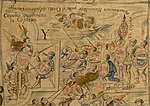
The Battle of Colhuacatonco was fought on 30 June 1521 during the late stages of the Siege of Tenochtitlan between Spanish-Tlaxcalan forces and the Mexica Empire (also typically referred as Aztec Empire). It is regarded as the most important victory achieved by the Mexica during the siege.The battle was fought as a result of the Spanish soldiers growing dissatisfied with the lack of progress done during the siege thus far, as the Spanish-Tlaxcalan forces had failed to take any important amount of territory since the beginning of June. Captain Hernán Cortés of the Spanish decided to launch a massive assault onto the city to take the market of Tlatelolco. The Spanish faced a much stronger resistance than expected and were eventually forced to retreat, suffering their worst losses since La Noche Triste and the Battle of Otumba a year earlier. Though much of the fighting occurred elsewhere in Tlatelolco, northern Tenochtitlan and Tacuba, the battle became known as such because most of the fighting occurred in this neighborhood; the Spaniards suffered their worst losses in this battle in this site.The battle became famous among modern historians as a result of the Spanish defeat, which was perceived as humiliating and retroactively seen as a demonstration of indigenous resistance against colonialism even in the most dire circumstances, as by this point the city was already facing widespread starvation and disease and yet still achieved victory, though the battle did not stop the city from falling to the Spanish Empire in August of the same year. The battle also became famous because Cortés narrowly escaped death during the fighting, as he was captured by multiple Mexica warriors, who typically didn't spare their prisoners, before he was rescued.