place

San Jerónimo Lídice

Magdalena ContrerasNeighborhoods in Mexico City
Church of San Jerónimo Aculco, San Jerónimo Lídice, Magdalena Contreras, Mexico City

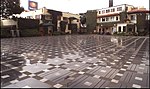
San Jerónimo Lídice, or San Jerónimo Aculco, is a former village now part of Mexico City in the Magdalena Contreras borough in the southwest of the city. A settlement on this spot, Aculco, dates back to Toltec times; its name means "where the water turns". The village specialized in fruit and vegetable production. When a dam in the area was built in 1934, Toltec remains were found, including the slope of a pyramid.The church of San Jerónimo Aculco dates from the 16th century, when it was founded by Franciscans. An open chapel remains. The church was modified in the 18th century. It celebrates its patron saint's day on September 30.In 1943, part of the village changed its name in commemoration of the massacre at Lidice in what is now the Czech Republic. Each year on June 10, the Lidice massacre is commemorated in the square in front of San Jerónimo Church.

Excerpt from the Wikipedia article San Jerónimo Lídice (License: CC BY-SA 3.0, Authors, Images).

San Jerónimo Lídice
Calle Heraclio Bernal, Mexico City

Geographical coordinates (GPS) Address Nearby Places
placeShow on map

Wikipedia: San Jerónimo LídiceContinue reading on Wikipedia

Geographical coordinates (GPS)

Latitude Longitude
N 19.333333333333 ° E -99.216666666667 °
placeShow on map

Address

Calle Heraclio Bernal

Calle Heraclio Bernal
10200 Mexico City (La Magdalena Contreras)
Mexico
mapOpen on Google Maps

Church of San Jerónimo Aculco, San Jerónimo Lídice, Magdalena Contreras, Mexico City
Share experience

Nearby Places

Estadio Olímpico Universitario

Estadio Olímpico Universitario is a multi-purpose stadium located inside Ciudad Universitaria in Mexico City. It was built in 1952 and at that time was the largest stadium in Mexico. This stadium has a capacity of 69,000. The first major event held in the stadium was the 1955 Pan American Games. During the 1950s and the 1960s this stadium was used mostly for college American football matches between the largest Mexican public universities at the time: UNAM and IPN. From the late 1950s it was used for football matches, some American football matches and athletics. American architect Frank Lloyd Wright called it "the most important building in the modern America".The Olímpico Universitario hosted the 1968 Summer Olympics; for the event the seating capacity was increased from 70,000 to 83,700 spectators (without substantially modifying the original structure) to cover the IOC requirements for an Olympic stadium. It was the location of the track and field competitions, equestrian events, certain association football matches, the arrival of the marathon and the opening and closing ceremonies. This was the Olympics in which Tommie Smith and John Carlos protested the treatment of African Americans in the United States by performing a black power salute during the medal ceremony for the 200 metres (which occurred in this stadium). The stadium also hosted the track and field events at the 1975 Pan American Games. The stadium hosted four games of the 1986 FIFA World Cup, but the final match was played in the bigger Estadio Azteca in Mexico City. The Tartan track was the first All-weather running track to be used in the Olympics. Such a track is now a requirement. During the second leg of the Liga MX final between Universidad Nacional and América, two hours before the start of the game, the building looked at its maximum capacity, but outside there was still a crowd of at least 30,000 more. At that time, Ciudad Universitaria did not have fences that surrounded it and it was easy to get to the access tunnels of the stadium. During the attempt of the fans to get to the pitch in one of the access tunnels (the tunnel number 29) a number of people got stuck and ended with the death of 11 people and several others injured. Currently, it is the home stadium of Universidad Nacional and American football team Pumas CU. This sport facility is part of the Ciudad Universitaria ("University City"), the main campus of the UNAM.

Liceo Mexicano Japonés

Liceo Mexicano Japonés, A.C. (Spanish for 'Mexican-Japanese Lyceum'); Japanese: 社団法人日本メキシコ学院, romanized: Shadan Hōjin Nihon Mekishiko Gakuin, or 日墨学院, transl. Japan-Mexico Institute) is a Japanese school based in the Pedregal neighborhood of the Álvaro Obregón borough in southern Mexico City, Mexico.It is a school for Japanese Mexicans and the sons of Japanese temporary workers who are often brought to Mexico by companies like Nissan. There is also a section for Mexicans with no Japanese origin or descent, but Japanese is taught beginning in kindergarten and the system is in both languages until high school.Carlos Kasuga Osaka, who served as the director of Yakult Mexico, founded the school and served as its chair. Within any Nikkei community, it was the first transnational educational institution.María Dolores Mónica Palma Mora, author of De tierras extrañas: un estudio sobre las inmigración en México, 1950–1990, wrote that the school is a "central institution in the life" of the Japanese Mexican group. Chizuko Hōgen Watanabe (千鶴子・ホーゲン・渡邊), the author of the master's thesis "The Japanese Immigrant Community in Mexico Its History and Present" at the California State University, Los Angeles, stated that Japanese parents chose the school because they wanted to "maintain their ethnic identity and pride, to implant a spiritual heritage that they claim is the basis for success, and to establish close ties with other Nikkei children who live in distant areas."As of 1983 many Nikkei and Japanese persons come to the school to study its management techniques and problems.