place

O'Higgins Park

Parks in Santiago, ChileUrban public parks
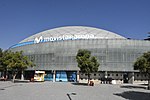
Elipse Parque O'Higgins 2

O'Higgins Park (Spanish: Parque O'Higgins, formerly known as Parque Cousiño), with an area of around 75 hectares (190 acres), is Santiago, Chile's second largest public park after Metropolitan Park. It is located in the center of the capital, in the Santiago Commune. The park, named after Bernardo O'Higgins (one of Chile's founding fathers), is a popular place for families to visit during weekends and holidays, especially during the national holiday on September 18, when a number of fondas and ramadas —traditional places for dancing, eating and drinking— are open to the public for a few days. Between 2011 to 2019, O’Higgins Park hosted the annual music festival Lollapalooza Chile.

Excerpt from the Wikipedia article O'Higgins Park (License: CC BY-SA 3.0, Authors, Images).

O'Higgins Park
Parque O'higgins, Santiago

Geographical coordinates (GPS) Address Nearby Places
placeShow on map

Wikipedia: O'Higgins ParkContinue reading on Wikipedia

Geographical coordinates (GPS)

Latitude Longitude
N -33.464166666667 ° E -70.66 °
placeShow on map

Address

Roller skating

Parque O'higgins
8370809 Santiago
Santiago Metropolitan Region, Chile
mapOpen on Google Maps

Elipse Parque O'Higgins 2
Share experience

Nearby Places

Fantasilandia
Fantasilandia

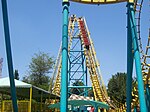
Fantasilandia is a Chilean amusement park. The park opened in 1978 and is located in a corner of the O'Higgins Park in Santiago, Chile.On January 28, 1978 the park opened for first time with only 8 attractions, including the "Galaxy" coaster, "Mansion Siniestra", "Ford T" and "Century 2000", among others. Over the years the park has replaced many of its classic rides with modern rides like "Top Spin", "Xtreme Fall", and "Boomerang". In late 2007, Fantasilandia opened a new ride to replace the old ride "Splash". Called "Tsunami" (Shoot the Chute) it was built in Chile under licence of Intamin A.G of Switzerland. With this milestone the park celebrated its 30-year anniversary. The ride "Villa Magica" also opened in the Kids Zone, located next to "Cine Magic 3D" and fast food locations. In 2008 Fantasilandia opened the second Vekoma SLC in South America. It is called "Raptor" and cost around US$10,000,000. In 2009 three new rides opened in the Kids Zone area. These were "Rockin' Tug", "Toing & Boing" and "Buggy Jump", all of them made in Italy by Zamperla. In late 2010 the Wave Swinger (a flying chairs ride) made by Zierer was opened and is called "Volare" A German built Condor ride was introduced in late 2011. It is called Ikarus. In December, 2012, Fantasilandia added an Air Race ride, built by Zamperla Rides, celebrating 35 years of the opening of the park A year later, the S.D.C Galaxy rollercoaster was closed due to an accident and the "Fun Karting" ride was removed. Also a restaurant with kiddie theme was added in front of the Air Race, and the construction for the new Mack Rides Twist 'n' Splash ride begun (which opened the 21st of December of that year) In December 2014, Fantasilandia started opening the "Moby Dick" ride, manufactured by Wisdom Rides, which opened officially to public in January 2015

Complex Engineering Systems Institute

The Complex Engineering Systems Institute (ISCI), housed at Universidad de Chile and having Pontificia Universidad Católica de Chile as an associate institution, brings together a group of top researchers from eight Chilean universities. Each of the researchers has been invited to join ISCI in view of their academic merit and for their existing or potential synergy with other ISCI members. This is the case with the 58 current ISCI members, who come from the Universidad de Chile, Pontificia Universidad Católica de Chile, Universidad de Santiago de Chile, Universidad Diego Portales, Universidad Adolfo Ibáñez, Universidad de los Andes, Universidad de Talca, and Universidad de Concepción. The researchers' group was formed on 24 January 2007 with two main goals. First, to define a solid set of engineering research areas that are both coherent and complementary, where all types of infrastructure interact with human behavior. Second, to establish a worldwide reference in Engineering research and education outside the USA and Europe, leading to a better understanding of relevant problems and attracting high-level, young researchers. This group has gained international recognition due to the quality of the research performed by its members. An important part of this work is performed jointly with researchers from other prestigious academic organizations abroad, through formal and personal collaboration networks. It prioritizes local synergy and nationwide impact, and the influence of its members has increased in relevant decision-making agents both in the industry and in public institutions.