place

Kaikorai Valley

Suburbs of DunedinUse New Zealand English from January 2022
RoslynMillKaikorai
RoslynMillKaikorai

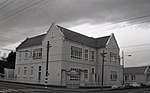
Kaikorai Valley is a long broad valley which runs through the west of the New Zealand city of Dunedin, 5 kilometres (3.1 mi) to the west of the city centre. It is the valley of a small stream, the Kaikorai Stream, which runs from northeast to southwest down the length of the valley. The valley provides a route into central Dunedin (Kaikorai Valley Road) which avoids the steep climb and descent over Lookout Point into Caversham, instead allowing for a gradual climb to the top of Stuart Street at Roslyn before a steep drop into the heart of the city. The valley contains several suburbs, largely isolated from the city centre by the ridge which forms the valley's eastern edge. This ridge was part of the crater wall of the long-extinct Dunedin Volcano. The valley is largely occupied by light industrial and wholesale businesses. Much of the land to the west of the valley is semi-rural; the eastern wall contains residential properties. The valley is home to three distinct suburbs: Kaikorai, Bradford, and Kenmure, while a fourth suburb, Burnside, lies at the valley's mouth, close to the junction of Kaikorai Valley Road and the Dunedin Southern Motorway, part of State Highway 1.

Excerpt from the Wikipedia article Kaikorai Valley (License: CC BY-SA 3.0, Authors, Images).

Kaikorai Valley
Mulberry Street, Dunedin Bradford

Geographical coordinates (GPS) Address Nearby Places
placeShow on map

Wikipedia: Kaikorai ValleyContinue reading on Wikipedia

Geographical coordinates (GPS)

Latitude Longitude
N -45.8768 ° E 170.4708 °
placeShow on map

Address

Mulberry Street

Mulberry Street
9011 Dunedin, Bradford
Otago, New Zealand
mapOpen on Google Maps

RoslynMillKaikorai
RoslynMillKaikorai
Share experience

Nearby Places

Mornington, Dunedin
Mornington, Dunedin

Mornington is a suburb of the city of Dunedin, in the South Island of New Zealand. It is situated on hilly slopes 2 kilometres (1.2 mi) to the west of the city centre, the slopes forming part of a ridge which surrounds the heart of the city. According to the 2013 New Zealand census, Mornington has a population of 3,267, a decrease of 126 people since the 2006 census. There were 1,518 males and 1,749 females.The use of the name Mornington for the area was first recorded in 1862. There seems to be some conjecture about the origin of the name – some sources record it as being purely descriptive, with the suburb receiving the first rays of the sunrise. There is some likelihood, however, that it was named by early landholder David Mailer after Mornington, Victoria. Mornington was a separate borough until amalgamation with Dunedin city in 1916Mornington's main streets are Mailer Street, Elgin Road, Glenpark Avenue, Eglinton Road, and Kenmure Road. It is a mainly residential suburb, with a retail area on Mailer Street. The suburb is surrounded by the suburbs of Kenmure to the west, Roslyn to the north, Maryhill to the southwest, Belleknowes to the northeast, and The Glen – divided roughly between Mornington and Caversham in the southeast. To the east lies the City Rise, an area that includes some old grand houses which surround the southern end of the city centre. The Town Belt, a bush-clad green belt dating to the early years of Dunedin's settlement, follows the slopes of the ridge, and lies immediately below Mornington, most prominently to the northeast. Mornington is the home to several sports grounds and teams, and was the site of New Zealand's first golf course, opened in 1872. The Zingari-Richmond Rugby Club is based at Montecillo ground in Eglinton Road. Montecillo, the city's home for war veterans, was moved from Eglinton Road to South Dunedin in the 1990s. Immediately above Montecillo ground is Unity Park, which is a venue for Mornington Football (soccer) club. Unity Park affords panoramic views across the central city, and is the site of a statue of Antarctic explorer Admiral Richard Byrd, commemorating the 1928 departure for the southern continent from Dunedin by Byrd's 1928 expeditionLandmarks within Mornington include the suburb's former post office in Mailer Street, a distinctive building completed in 1905 with small a mock-Byzantine domed tower above the entrance.

Maryhill, New Zealand

Maryhill is a residential suburb of the New Zealand city of Dunedin. It is located on a ridge to the southwest of the central city between the suburbs of Mornington, Kenmure, and Caversham. The smaller suburb of Balaclava lies immediately to its west. Maryhill is believed to take its name from a district in the city of Glasgow in Scotland, where many of the early settlers of the suburb originated. In this regard it is unusual among Dunedin suburbs, many of which are named for suburbs of Edinburgh - Maryhill and the nearby Little Paisley are the only suburbs named for Glaswegian locations, and the latter is an old name rarely used today. A second theory is that Maryhill was named in honour of Mary, the wife of early Dunedin settler John Bathgate.The main road in Maryhill is Glenpark Avenue, which runs south from a series of small streets which connect it with Mailer Street Mornington. At its southern end, it links with a tortuous zig-zag road, Lancefield Street, which leads to the suburb of Caversham. Several roads cross Glenpark Avenue; notable among them are Maryhill Terrace and Glen Road. These connect with Caversham at The Glen, in Maryhill's southwestern corner. Elgin Road, which runs parallel with Glenpark Avenue and lies at roughly the border of Maryhill, Mornington, and Kenmure, forms a major access road at Maryhill's western edge. This route links with Mailer Street and Kenmure Road at its northernmost point, and with Mornington Road at its southern end. Little Paisley is an old name for an area close to the boundary of Maryhill and Mornington, between the top of Glen Road and Eglinton Road close to Dunedin Southern Cemetery. It gained this name in the early years of Dunedin's settlement, was settled by weavers from Paisley. The name is rarely used today. Maryhill was connected from 1855 to 1955 to the Dunedin cable tramway system via the Maryhill Extension. The line, which followed Glenpark Avenue from Mornington, was perfectly straight, and was sometimes referred to as The Big Dipper because of its undulating course. Maryhill's notable residents have included writer and publisher Sir Alfred Hamish Reed.

Brockville, New Zealand

Brockville is a residential suburb of the New Zealand city of Dunedin. It is located at the edge of the city's main urban area, 5.5 kilometres (3.4 mi) to the northwest of the city centre, but separated from it by both a ridge of hills and the Kaikorai Valley. The name Brockville comes from early English settler Frederick Brock-Hollinshead, who, after arriving in Dunedin in 1853, began to build a substantial residence in this location. Brock-Hollinshead abandoned the house before completing it, and returned to England.The suburb's main street is Brockville Road, which leaves Kaikorai Valley Road close to the boundary between the suburbs of Kaikorai and Bradford, winding up the slopes which forms the northwestern boundary of Kaikorai Valley. Frasers Creek winds around the edge of this slope. The scenic reserve of Fraser's Gully, through which this stream flows, lies immediately to the northeast of Brockville, between it and the suburb of Halfway Bush, ending on Frasers Road off Kaikorai Valley Road. The main residential area of Brockville is centred on the upper section of Brockville Road, and the numerous crescents which branch off it. The suburb contains a kindergarten and a Brockville Full Primary School, which are located on this part of Brockville Road. The lower part of Brockville Road is occasionally regarded as a separate suburb known as Glenross, including the newly built houses on Sretlaw Place. Brockville Road terminates at a junction with Dalziel Road, a semi-rural road which marks the edge of Dunedin's main urban area. This road links with Three Mile Hill Road above Halfway Bush in the north, running past the city's Mount Grand Reservoir before joining with another road leading down to the suburb of Burnside. A dry weather road links the southern end of Dalziel Road with Abbotsford.Brockville possesses a church, corner shop, takeaway shop and a convent rest home. In addition to all these, Brockville has two residential parks, Brockville football and cricket grounds and skate ramp, and a community park and playground situated to the north of a small cluster of shops on Brockville Road.

Kaikorai Presbyterian Church

Kaikorai Presbyterian Church is a Presbyterian congregation of the PCANZ Presbyterian Church of Aotearoa New Zealand located in Kaikorai, a suburb of Dunedin, New Zealand. Kaikorai Presbyterian Church has stood at the crossroads of Taieri Road and Nairn Street since 1868. As early as 1852 pioneer families trudged along bush tracks and muddy roads, (for those days the bush extended from Flagstaff to the shore) for weekly prayer meetings, first in Hood Hall (now Ferntree House), and then at Wakari School. As a mission outpost of Knox Church, a minister preached weekly at the school. The need for a church grew and in time the Wakari School Committee requested that a church building be erected in the district. With self-sacrifice and faith, £477 was raised, and a modest wooden building with a shingle roof was erected on land gifted by Miss Helen Hood. Originally this was known as 'Wakari Church' however given the location the present name of Kaikorai was more appropriate. The first service was held in 1866, with the church operating as a daughter of Knox Church. Such was the faith and growth of the congregation that in 1868 they were established as an independent congregation and authorised to call a minister, the first of many who served not only the church but also the community. That first church building became too small, and again the congregation met the challenge, and with extensions, a second church came into being in 1880. As the congregation grew so did the district, with the advent of the Roslyn Mills and the Rosyln and Kaikorai cablecars. In 1906, again in faith, a tender of £2750 was accepted for the erection of a new church. The Mayor of Roslyn laid the foundation stone (beneath which is a time capsule!), and in 1907 the third church held its first service. It stands, today, on the site of the old wooden church which was moved to the rear of the grounds to serve as a hall. In the brick church four stained glass windows were installed to honour founding members. The original wooden church was demolished to make way for the present hall, which is in constant use by both church and community. By 1918 there were twelve places of worship in the area prompting thoughts of union. But it was not until the centenary of the church that it became part of the West Dunedin Union, serving the districts of Wakari, Halfway Bush, Brockville and Kaikorai – the very areas from which those early settlers traveled to worship, and Waitati. It had union too with the Roslyn Methodist Church and the local Congregational and Church of Christ churches. Today the pendulum has swung and it is again known as Kaikorai Presbyterian Church. The years have seen the rule of six sovereigns, the emergence of the depression (during which the congregation gave unobtrusive unemployment assistance), and two world wars. The church has moved with changing times, with heated and earnest discussion as to whether organ music should be permitted, and decades later whether dancing should be permitted at Bible Class socials.

Roslyn, Dunedin
Roslyn, Dunedin

Roslyn is a major residential and retail suburb of the New Zealand city of Dunedin. It is located 150 metres (490 ft) above the city centre on the ridge which runs in a crescent around the central city's western edge. It is 2.5 kilometres (1.6 mi) to the northwest of the city centre, immediately above the Town Belt. Roslyn is connected to the city's CBD via Stuart Street and City Road. The former of these runs below Roslyn under the Roslyn Overbridge, and is linked to the suburb via a complex interchange To the west of Roslyn, Stuart Street passes the suburbs of Kaikorai and Wakari before becoming Taieri Road, which eventually traverses Three Mile Hill to reach the Taieri Plains. City Road travels through Belleknowes before linking with Rattray Street and descending the City Rise, reaching the central city at The Exchange. Roslyn is also connected to the suburbs of Mornington to the southwest and Maori Hill to the northeast by way of Highgate, Roslyn's main road. Roslyn is predominantly residential, though it does contain one of the city's peripheral retail areas at and around Roslyn Village on Highgate just to the southwest of the overbridge. One of the city's most notable single-sex girls' schools, Columba College, is located close to the suburb's border with Maori Hill. The suburb and its neighbour, Wakari, between them lend their names to one of Dunedin's most prominent football teams, Roslyn-Wakari. This team's home ground is actually at Ellis Park in Kaikorai, immediately to the northwest of Roslyn. Also in Kaikorai is the building of the former Roslyn Woollen Mills, a company through whose products the name of Roslyn was widely known nationwide.

Wakari

Wakari ( wah-kah-ree) is a residential suburb of the New Zealand city of Dunedin. It is located 2.5 kilometres (1.6 mi) to the northwest of the city centre, immediately to the west of the ridge which runs to the west of the city's centre. Wakari lies to the north of the upper reaches of the Kaikorai Valley, and is also north of the suburb of Kaikorai. The suburbs of Roslyn and Maori Hill are situated on the ridge immediately to the southeast and east of Wakari. The suburb of Halfway Bush lies to the northwest, and the smaller suburb of Helensburgh lies to the north. Wakari is an anglicisation of the Māori Whakaari, "exposed to view". This is the Māori name for the hill, Flagstaff, which lies 2.5 kilometres (1.6 mi) to the northwest. A shibboleth is that many (though not all) local residents pronounce the name as "wy-kar-ree" (). The suburb is bounded in the south by Taieri Road, a main suburban arterial route which links central Dunedin with the Taieri Plains. West of Halfway Bush, the road becomes Three Mile Hill Road, crossing the eponymous hill to reach the Taieri Plain northeast of Mosgiel. To the southeast of Wakari, Taieri Road runs under the Roslyn Overbridge and becomes Stuart Street, one of central Dunedin's main streets. Other main roads in and around Wakari include Balmacewen Road in the northern part of the suburb, Helensburgh Road in the northeast, Nairn Street, and Shetland Street. Wakari's most prominent structure is the Wakari Hospital, one of Dunedin's main health care centres, which specialises in psychiatric services. This hospital is located in the west of the suburb, close to its boundary with Halfway Bush. Arai te Uru Marae is also located in Wakari. It is a marae (meeting ground) of Ngāi Tahu and includes Arai te Uru wharenui (meeting house). It is next to Balmacewen Intermediate School.