place

Wakari

Suburbs of DunedinUse New Zealand English from January 2022

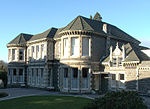
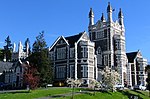
Wakari ( wah-kah-ree) is a residential suburb of the New Zealand city of Dunedin. It is located 2.5 kilometres (1.6 mi) to the northwest of the city centre, immediately to the west of the ridge which runs to the west of the city's centre. Wakari lies to the north of the upper reaches of the Kaikorai Valley, and is also north of the suburb of Kaikorai. The suburbs of Roslyn and Maori Hill are situated on the ridge immediately to the southeast and east of Wakari. The suburb of Halfway Bush lies to the northwest, and the smaller suburb of Helensburgh lies to the north. Wakari is an anglicisation of the Māori Whakaari, "exposed to view". This is the Māori name for the hill, Flagstaff, which lies 2.5 kilometres (1.6 mi) to the northwest. A shibboleth is that many (though not all) local residents pronounce the name as "wy-kar-ree" (). The suburb is bounded in the south by Taieri Road, a main suburban arterial route which links central Dunedin with the Taieri Plains. West of Halfway Bush, the road becomes Three Mile Hill Road, crossing the eponymous hill to reach the Taieri Plain northeast of Mosgiel. To the southeast of Wakari, Taieri Road runs under the Roslyn Overbridge and becomes Stuart Street, one of central Dunedin's main streets. Other main roads in and around Wakari include Balmacewen Road in the northern part of the suburb, Helensburgh Road in the northeast, Nairn Street, and Shetland Street. Wakari's most prominent structure is the Wakari Hospital, one of Dunedin's main health care centres, which specialises in psychiatric services. This hospital is located in the west of the suburb, close to its boundary with Halfway Bush. Arai te Uru Marae is also located in Wakari. It is a marae (meeting ground) of Ngāi Tahu and includes Arai te Uru wharenui (meeting house). It is next to Balmacewen Intermediate School.

Excerpt from the Wikipedia article Wakari (License: CC BY-SA 3.0, Authors).

Wakari
Mount Street, Dunedin Wakari

Geographical coordinates (GPS) Address Nearby Places
placeShow on map

Wikipedia: WakariContinue reading on Wikipedia

Geographical coordinates (GPS)

Latitude Longitude
N -45.858888888889 ° E 170.48333333333 °
placeShow on map

Address

Mount Street

Mount Street
9010 Dunedin, Wakari
Otago, New Zealand
mapOpen on Google Maps

Share experience

Nearby Places

Kaikorai Presbyterian Church

Kaikorai Presbyterian Church is a Presbyterian congregation of the PCANZ Presbyterian Church of Aotearoa New Zealand located in Kaikorai, a suburb of Dunedin, New Zealand. Kaikorai Presbyterian Church has stood at the crossroads of Taieri Road and Nairn Street since 1868. As early as 1852 pioneer families trudged along bush tracks and muddy roads, (for those days the bush extended from Flagstaff to the shore) for weekly prayer meetings, first in Hood Hall (now Ferntree House), and then at Wakari School. As a mission outpost of Knox Church, a minister preached weekly at the school. The need for a church grew and in time the Wakari School Committee requested that a church building be erected in the district. With self-sacrifice and faith, £477 was raised, and a modest wooden building with a shingle roof was erected on land gifted by Miss Helen Hood. Originally this was known as 'Wakari Church' however given the location the present name of Kaikorai was more appropriate. The first service was held in 1866, with the church operating as a daughter of Knox Church. Such was the faith and growth of the congregation that in 1868 they were established as an independent congregation and authorised to call a minister, the first of many who served not only the church but also the community. That first church building became too small, and again the congregation met the challenge, and with extensions, a second church came into being in 1880. As the congregation grew so did the district, with the advent of the Roslyn Mills and the Rosyln and Kaikorai cablecars. In 1906, again in faith, a tender of £2750 was accepted for the erection of a new church. The Mayor of Roslyn laid the foundation stone (beneath which is a time capsule!), and in 1907 the third church held its first service. It stands, today, on the site of the old wooden church which was moved to the rear of the grounds to serve as a hall. In the brick church four stained glass windows were installed to honour founding members. The original wooden church was demolished to make way for the present hall, which is in constant use by both church and community. By 1918 there were twelve places of worship in the area prompting thoughts of union. But it was not until the centenary of the church that it became part of the West Dunedin Union, serving the districts of Wakari, Halfway Bush, Brockville and Kaikorai – the very areas from which those early settlers traveled to worship, and Waitati. It had union too with the Roslyn Methodist Church and the local Congregational and Church of Christ churches. Today the pendulum has swung and it is again known as Kaikorai Presbyterian Church. The years have seen the rule of six sovereigns, the emergence of the depression (during which the congregation gave unobtrusive unemployment assistance), and two world wars. The church has moved with changing times, with heated and earnest discussion as to whether organ music should be permitted, and decades later whether dancing should be permitted at Bible Class socials.

Roslyn, Dunedin
Roslyn, Dunedin

Roslyn is a major residential and retail suburb of the New Zealand city of Dunedin. It is located 150 metres (490 ft) above the city centre on the ridge which runs in a crescent around the central city's western edge. It is 2.5 kilometres (1.6 mi) to the northwest of the city centre, immediately above the Town Belt. Roslyn is connected to the city's CBD via Stuart Street and City Road. The former of these runs below Roslyn under the Roslyn Overbridge, and is linked to the suburb via a complex interchange To the west of Roslyn, Stuart Street passes the suburbs of Kaikorai and Wakari before becoming Taieri Road, which eventually traverses Three Mile Hill to reach the Taieri Plains. City Road travels through Belleknowes before linking with Rattray Street and descending the City Rise, reaching the central city at The Exchange. Roslyn is also connected to the suburbs of Mornington to the southwest and Maori Hill to the northeast by way of Highgate, Roslyn's main road. Roslyn is predominantly residential, though it does contain one of the city's peripheral retail areas at and around Roslyn Village on Highgate just to the southwest of the overbridge. One of the city's most notable single-sex girls' schools, Columba College, is located close to the suburb's border with Maori Hill. The suburb and its neighbour, Wakari, between them lend their names to one of Dunedin's most prominent football teams, Roslyn-Wakari. This team's home ground is actually at Ellis Park in Kaikorai, immediately to the northwest of Roslyn. Also in Kaikorai is the building of the former Roslyn Woollen Mills, a company through whose products the name of Roslyn was widely known nationwide.

Maori Hill
Maori Hill

Māori Hill is a residential suburb of the New Zealand city of Dunedin. It is located at the northern end of the ridge which runs in a crescent around the central city's western edge, 2 kilometres (1.2 mi) to the northwest of the city centre, immediately above and within the Town Belt. It is connected to Dunedin North, which lies to the east, via Drivers Road, the suburbs of Roslyn and Kaikorai to the southwest via Highgate, and the suburb of Wakari to the northwest via Balmacewen Road. In the northeast of the suburb lies the recreational ground of Prospect Park, and this part of Māori Hill is also often known by this name. From Prospect Park, views across the lower Leith Valley can be obtained, as the park sits close to the edge of cliffs which rise above the broad canyon at Woodhaugh. A steep walking track, the Bullock Track, links the two suburbs. Māori Hill is regarded as one of the city's wealthier and more exclusive suburbs, and contains many fine houses, especially in the maze of winding streets which run through the bush-clad slopes of the Town Belt. These houses include the historic manor Olveston, which has been owned by the city and open to the public since the 1960s. Unlike neighbouring hill suburbs like Roslyn, Māori Hill was not served by a cable car, possibly underlying its greater degree of exclusivity. Notable features of Māori Hill include the Balmacewen Golf Course, home of the Otago Golf Club, in the suburb's northwest. This is one of New Zealand's oldest and finest courses. A state integrated Presbyterian boys' secondary school, John McGlashan College, is located close to the golf course. To the southeast of the course lies a recreation ground, Bishopscourt, and nearby is Balmacewen Intermediate School. As with Prospect Park, this area is often referred to as a separate suburb, Balmacewen, named after the residence of early settler John McGlashan, whose wife's maiden name was McEwen. To the northwest of the golf course is an area of scenic reserve which surrounds the Ross Creek Reservoir in Glenleith. Several popular walking tracks lead down to the reservoir from Cannington Road, which marks the northern edge of Māori Hill. Other schools in Māori Hill include Māori Hill School, a state primary school. On the Roslyn/Kaikorai/Māori Hill border is Columba College, a state integrated Presbyterian girls secondary school, with a coeducational Junior (primary) school. Māori Hill contains the city's largest private hospitals. Formerly known as the Mater Misericordiae, it is now the Mercy Hospital, and contains as part of its complex the Marinoto Clinic. This is located on Newington Avenue, one of several streets which wind down into the Town Belt from Highgate. The hospital is built around Marinoto, the former home of the Sargood family and now one of the hospital's major buildings.