place

Clinical Center of the University of Sarajevo

Hospitals in Bosnia and HerzegovinaLang and lang-xx code promoted to ISO 639-1
Sarajevo – Stadion Asim Ferhatović Hase (2012) (cropped to Clinical Center of the University of Sarajevo (Kosevo Hospital)

Clinical Center of the University of Sarajevo (Bosnian: Klinički centar Univerziteta u Sarajevucode: bos promoted to code: bs , KCUS or Bosnian: Univerzitetski klinički centar Sarajevocode: bos promoted to code: bs , UKCS), is the largest hospital institution in Bosnia and Herzegovina. It serves as the teaching base of the Faculty of Medicine, University of Sarajevo, being part of the University of Sarajevo. It consists of 37 clinics, a hospital pharmacy, and associated departments and services.

Excerpt from the Wikipedia article Clinical Center of the University of Sarajevo (License: CC BY-SA 3.0, Authors, Images).

Clinical Center of the University of Sarajevo
Bolnička, Sarajevo

Geographical coordinates (GPS) Address External links Nearby Places
placeShow on map

Wikipedia: Clinical Center of the University of SarajevoContinue reading on Wikipedia

Geographical coordinates (GPS)

Latitude Longitude
N 43.869171 ° E 18.415607 °
placeShow on map

Address

Klinički Centar Univerziteta u Sarajevu

Bolnička 25
71000 Sarajevo
Federation of Bosnia and Herzegovina, Bosnia and Herzegovina
mapOpen on Google Maps

linkWikiData (Q24702947)
linkOpenStreetMap (375862791)

Sarajevo – Stadion Asim Ferhatović Hase (2012) (cropped to Clinical Center of the University of Sarajevo (Kosevo Hospital)
Share experience

Nearby Places

Republic of Bosnia and Herzegovina

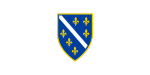
The Republic of Bosnia and Herzegovina (Serbo-Croatian: Republika Bosna i Hercegovina / Република Босна и Херцеговина) was a state in Southeastern Europe, existing from 1992 to 1995. It is the direct legal predecessor to the modern-day state of Bosnia and Herzegovina.Bosnia and Herzegovina seceded from the disintegrating Socialist Federal Republic of Yugoslavia on 3 March 1992. The Bosnian War broke out soon after its Declaration of Independence and lasted for 3 years. Leaders from two of the three main ethnicities of Bosnia and Herzegovina, namely the Serbs and the Croats, separately established the entities of the Republika Srpska and the Croatian Republic of Herzeg-Bosnia, respectively, which were unrecognized by the Bosnian state and international governments. Informally, these events were considered as evidence that the Republic of Bosnia and Herzegovina represented primarily its Bosniak (mainly Muslim) population, though formally, the presidency and government of the republic was still composed of Serbs and Croats along with Bosniaks.Under the Washington Agreement of 1994, however, Bosniaks were joined by Croats of Herzeg-Bosnia, which was abolished by this agreement, in support for the Republic by the formation of the Federation of Bosnia and Herzegovina, a sub-state joint entity. In 1995, the Dayton Peace Accords joined the Federation of Bosnia and Herzegovina with the Serb entity, the Republika Srpska, from that point onward recognized formally as a political sub-state entity without a right of secession, into the state of Bosnia and Herzegovina.The prefix Republic was removed following the co-signing of the Annex 4 of the Dayton Agreement, containing the constitution of Bosnia and Herzegovina, on 14 December 1995.

Ethnic cleansing in the Bosnian War

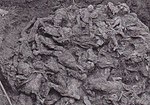
Ethnic cleansing occurred during the Bosnian War (1992–95) as large numbers of Bosnian Muslims (Bosniaks) and Bosnian Croats were forced to flee their homes or were expelled by the Army of Republika Srpska and Serb paramilitaries. Bosniaks and Bosnian Serbs had also been forced to flee or were expelled by Bosnian Croat forces, though on a restricted scale and in lesser numbers. The UN Security Council Final Report (1994) states while Bosniaks also engaged in "grave breaches of the Geneva Conventions and other violations of international humanitarian law", they "have not engaged in "systematic ethnic cleansing"". According to the report, "there is no factual basis for arguing that there is a 'moral equivalence' between the warring factions".Beginning in 1991, political upheavals in Bosnia and Herzegovina displaced about 2.7 million people by mid-1992, of which over 700,000 sought asylum in other European countries, making it the largest exodus in Europe since World War II. It is estimated between 1.0 and 1.3 million people were uprooted in these ethnic cleansing campaigns, and that tens of thousands were killed. The methods used during the Bosnian ethnic cleansing campaigns include "killing of civilians, rape, torture, destruction of civilian, public, and cultural property, looting and pillaging, and the forcible relocation of civilian populations". Most of the perpetrators of these campaigns were Serb forces and most of the victims were Bosniaks. The UN-backed International Criminal Tribunal for the former Yugoslavia (ICTY) later convicted several officials for persecution on political, racial and religious grounds; forced transfer and deportation constituting a crime against humanity. The Srebrenica massacre, which was also included as part of the ethnic cleansing campaign, was found to constitute the crime of genocide.

Klix.ba

Klix.ba is a Bosnian web portal, the fourth most visited website in Bosnia and Herzegovina.It was founded in 2000 as a forum, called Sarajevo-x, and changed its name to the current one in 2012. Every day it reports on information and news from Bosnia and Herzegovina and the world. The author and owner of the Internet portal Klix is the web development company InterSoft d.o.o. from Sarajevo. Surprise financial and administrative inspections are used as a method to punish media outlets after critical reporting in Bosnia and Herzegovina. This was the case of the joint raid conducted on 29 December 2014 by the Federation of Bosnia and Herzegovina (FBiH) and Republika Srpska (RS) polices at the Sarajevo premises of the klix.ba website, after it had run a story about alleged corruption in the RS National Assembly. The police seized the website equipment and detained four journalists for questioning, whom they released after eight hours. They requested them to surrender the source of a wiretap in which RS Prime Minister Željka Cvijanović is caught saying to have bought two members of parliament to ensure a majority for her party in the Assembly.: 36  The raid had been preceded by a police hearing in Banja Luka, in which Klix.ba journalists had already been required to surrender their sources. According to the journalists, the raid was meant as an intimidation message to all journalists in the country.On 10 March 2015 Klix.ba became the first media from Bosnia and Herzegovina to have a verified Facebook page.