place

La Merced (neighborhood)

Neighborhoods in Mexico CityTourist attractions in Mexico CityWorld Heritage Sites in Mexico
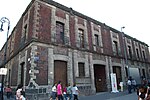
RoldánCenterDF02
RoldánCenterDF02

La Merced is a barrio or a neighborhood of Mexico City defined by its socioeconomics and history rather than by an official designation. It extends over the southeast of the historic center of Mexico City and is one of the oldest sections of the city, established over 700 years ago by the Mexica as part of the founding of Tenochtitlan. Over its history the area was associated with commerce, first as a major docking area for boats bringing goods to Tenochtitlan/Mexico City on Lake Texcoco, later via canals as the lake was slowly drained. In the latter 19th century, the La Merced market was established in the area replacing the massive La Merced monastery which was almost completely destroyed in the 1860s. This market was established to centralize the marketing of foodstuffs for the city on one area. The first La Merced market was built in 1890 and then replaced by the current building in 1957, one of the largest traditional Mexican markets in Mexico City. In the 1980s, the wholesale function of this market was taken over by the newly constructed Centro de Abasto in the south of the city, with the barrio then going into economic and social decline, with the area having problems with poverty, prostitution and population loss. Although there have been efforts to revitalize the area and the La Merced market remains important.

Excerpt from the Wikipedia article La Merced (neighborhood) (License: CC BY-SA 3.0, Authors, Images).

La Merced (neighborhood)
Anillo de Circunvalación, Mexico City

Geographical coordinates (GPS) Address Nearby Places
placeShow on map

Wikipedia: La Merced (neighborhood)Continue reading on Wikipedia

Geographical coordinates (GPS)

Latitude Longitude
N 19.426733333333 ° E -99.125433333333 °
placeShow on map

Address

Hotel Ampudia

Anillo de Circunvalación 611 ó 619
06060 Mexico City
Mexico
mapOpen on Google Maps

RoldánCenterDF02
RoldánCenterDF02
Share experience

Nearby Places

Valvanera Cathedral, Mexico City

The Cathedral of Our Lady of Valvanera (also Maronite Cathedral of Our Lady of Valvanera sometimes spelled Balvanera, Spanish: Catedral Maronita de Nuestra Señora de Valvanera) is located southeast of the main plaza, or Zocalo, of Mexico City on the corner of Correo Mayor and Republica de Uruguay in the historic center. The church originally belonged to the Convent of Santo Niño Perdido which was founded in 1573. This would then become a Conceptionist convent in the 17th century, when the church and convent were rebuilt in 1667. It also gained its current name at that time.Due to the Reform Laws in 1861, the nuns were required to vacate the convent portion and the cloister and other buildings associated with the church were demolished. Its main altar was nearly destroyed during the political struggles of the 19th century but the oil of the Black Virgin of Valvanera (or Balvanera) remains.This church was declared a historic monument on August 30, 1932.Nowadays this church is the Cathedral of the Maronite Catholic Eparchy of Our Lady of the Martyrs of Lebanon in Mexico. The church is of Baroque style with its main entrance at the side of the church, as was common with convents in Mexico. The bell tower is covered in tile from Puebla. Only this church and the church of La Encarnación have Puebla tile on the bell towers. The church facade is of tezontle divided by five buttresses and topped by an entablature with a frieze with anagrams of the names of Jesus and Mary. Both portals have two levels of decoration on them. Inside, the main altar is Neoclassical and made of stone. The oil of Nuestra Señora de Balvanera is from the 17th century. It and the sculptures here were donated by a Maronite church. The sacristy has paintings by Carlos Clemente Lopez that date from 1750.