place

La Merced Market

Cuauhtémoc, Mexico CityHistoric center of Mexico CityRed-light districts in MexicoRetail markets in Mexico City
Hall2MercedDF
Hall2MercedDF

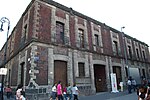
The La Merced Market is a traditional public market located in the eastern edge of the historic center of Mexico City and is the largest retail traditional food market in the entire city. The area, also called La Merced, has been synonymous with commercial activity since the early colonial period when traders arrived here from other parts of New Spain. At one time, nearly the entire neighborhood was filled with market stalls and in the 1860s it was decided to build a permanent market on the grounds of the old La Merced monastery. In the first half of the 20th century, this market was the major wholesaler for the entire city. This ended when the Central de Abasto was opened in the 1980s, but La Merced remains the largest traditional retail market. The market area is also known for flagrant prostitution in which women can be seen soliciting at all hours of the day and night. It is estimated that about one third of these prostitutes are underage.

Excerpt from the Wikipedia article La Merced Market (License: CC BY-SA 3.0, Authors, Images).

La Merced Market
Calle G. Pedraza, Mexico City

Geographical coordinates (GPS) Address External links Nearby Places
placeShow on map

Wikipedia: La Merced MarketContinue reading on Wikipedia

Geographical coordinates (GPS)

Latitude Longitude
N 19.425922222222 ° E -99.124058333333 °
placeShow on map

Address

Mercado La Merced

Calle G. Pedraza
15100 Mexico City
Mexico
mapOpen on Google Maps

linkWikiData (Q3377015)
linkOpenStreetMap (137025801)

Hall2MercedDF
Hall2MercedDF
Share experience

Nearby Places

Valvanera Cathedral, Mexico City

The Cathedral of Our Lady of Valvanera (also Maronite Cathedral of Our Lady of Valvanera sometimes spelled Balvanera, Spanish: Catedral Maronita de Nuestra Señora de Valvanera) is located southeast of the main plaza, or Zocalo, of Mexico City on the corner of Correo Mayor and Republica de Uruguay in the historic center. The church originally belonged to the Convent of Santo Niño Perdido which was founded in 1573. This would then become a Conceptionist convent in the 17th century, when the church and convent were rebuilt in 1667. It also gained its current name at that time.Due to the Reform Laws in 1861, the nuns were required to vacate the convent portion and the cloister and other buildings associated with the church were demolished. Its main altar was nearly destroyed during the political struggles of the 19th century but the oil of the Black Virgin of Valvanera (or Balvanera) remains.This church was declared a historic monument on August 30, 1932.Nowadays this church is the Cathedral of the Maronite Catholic Eparchy of Our Lady of the Martyrs of Lebanon in Mexico. The church is of Baroque style with its main entrance at the side of the church, as was common with convents in Mexico. The bell tower is covered in tile from Puebla. Only this church and the church of La Encarnación have Puebla tile on the bell towers. The church facade is of tezontle divided by five buttresses and topped by an entablature with a frieze with anagrams of the names of Jesus and Mary. Both portals have two levels of decoration on them. Inside, the main altar is Neoclassical and made of stone. The oil of Nuestra Señora de Balvanera is from the 17th century. It and the sculptures here were donated by a Maronite church. The sacristy has paintings by Carlos Clemente Lopez that date from 1750.