The State University of Haiti (French: Université d'État d'Haïti (UEH), Haitian Creole: Inivèsite Leta Ayiti) is one of Haiti's most prestigious institutions of higher education. It is located in Port-au-Prince.
Its origins date to the 1820s, when colleges of medicine and law were established. In 1942, the various faculties merged into the University of Haiti. After a student strike in 1960, François Duvalier's government brought the university under firm government control and renamed it the State University of Haiti. In 1983, the university became an independent institution according to the Haitian constitution. The university's independent status was confirmed in the Haitian constitution of 1987.
In 1981, there were 4,099 students at the University of Haiti, of whom 26% were enrolled in the School of Law and Economics, 25% in the School of Medicine and Pharmacy, 17% in the School of Administration and Management, and 11% in the School of Science and Topography. Despite the important role played by agriculture in the Haitian economy, only 5% of the university's students were enrolled in the School of Agronomy and Veterinary Medicine. In 1981, the University of Haiti had 559 professors, compared to 207 in 1967. Most professors worked part-time, were paid on an hourly basis, and had little time for contact with students. UEH also suffered severe shortages of books and other materials.
As of 2010, tuition was US$15 a year. However, while this made it more affordable for many Haitians than other forms of tertiary education in the country, competition for places was fierce. The university accepted only 15% of applicants for undergraduate places, while its dentistry school had just 20 places for about 800 applicants yearly.
Among its past rectors, the university includes the writer Jean Price Mars.
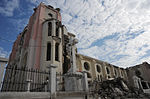
The university's buildings were largely destroyed during the earthquake of January 12, 2010. A consortium of historically black colleges in the United States was formed to help rebuild part of the campus.
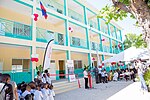
After the earthquake, the government of the Dominican Republic paid for the construction of a new university campus near the town of Limonade in northern Haiti, called the Université d'État d'Haïti, Campus Henri Christophe de Limonade.

 Continue reading on Wikipedia