place

Santa Veracruz Monastery, Mexico City

18th-century Roman Catholic church buildings in Mexico18th-century establishments in MexicoChurrigueresque architecture in MexicoDefunct hospitals in MexicoFormer Christian monasteries in Mexico
Historic center of Mexico CityRoman Catholic churches in Mexico City
FacadeSVeraCruzCentroDF

The Santa Veracruz Monastery in the historic center of Mexico City is one of the oldest religious establishments in Mexico City and was the third most important church in the area in the 16th century. It was established by a religious brotherhood founded by Hernán Cortés. The parish church was originally built in 1586, but this building was replaced in the 18th century to the one standing today. The former monastery building and hospital now house the Franz Mayer Museum, but the church still maintains its original function. Most of its interior decorations are gone, but it is still home to two important images, the Christ of the Seven Veils and the Virgin of the Remedies (also called La Gachupina). The church is located on the east side of the Plaza of Santa Veracruz, between 2 de Abril and Valeriano Trijillo Streets facing Hidalgo Street and the Alameda Central .The church was significantly damaged by the 2017 Mexico City earthquake, and by two fires in 2020.

Excerpt from the Wikipedia article Santa Veracruz Monastery, Mexico City (License: CC BY-SA 3.0, Authors, Images).

Santa Veracruz Monastery, Mexico City
Plaza de Santa Veracruz, Mexico City

Geographical coordinates (GPS) Address Nearby Places
placeShow on map

Wikipedia: Santa Veracruz Monastery, Mexico CityContinue reading on Wikipedia

Geographical coordinates (GPS)

Latitude Longitude
N 19.436997222222 ° E -99.143758333333 °
placeShow on map

Address

San Juan de Dios

Plaza de Santa Veracruz
06300 Mexico City
Mexico
mapOpen on Google Maps

FacadeSVeraCruzCentroDF
Share experience

Nearby Places

Museo Nacional de la Estampa

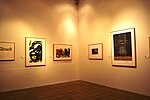
The Museo de la Estampa (Museum of Graphic Arts) is a museum in Mexico City, dedicated to the history, preservation and promotion of Mexican graphic arts. The word “estampa” means “engraving” or “printing” refers to works which have the quality of being reproducible and include seals, woodcuts, lithography and others. The museum was created in 1986 and located in a 19th-century Neoclassical building located in the Plaza de Santa Veracruz in the historic center of the city. This building was remodeled both to house the museum and to conserve its original look. The building houses both a permanent and multiple temporary exhibits. The permanent collection includes pre-Hispanic clay seals used for printing designs on fabrics, ceramics and other surfaces, printed material from the colonial period and more recent creations. More recent works are divided into periods such as the “age of the San Carlos Academy” (18th -19th century) and the “resurgence of the graphics arts” which covered the decades from the 1920s to the 1960s. The best-known works here are those of José Guadalupe Posada, the creator of “La Catrina” and numerous satirical comics. It also includes video programs on graphic techniques such as wood cuts, etchings and more.The museum works in collaboration with Museo Nacional de Arte, which holds Mexico’s largest collection of graphic arts including those done by Mexican artists José Guadalupe Posada, José Clemente Orozco and David Alfaro Siqueiros, as well as foreign artists such as Mario Benedetti and Ilya Kabakov. This collection is called the National Collection of Graphic Works (Colección Nacional de Estampas).Much of the museum’s space is dedicated to temporary exhibits such as the 2003 exhibit of works from the Centro de Formación y Producción Gráfica del Antiguo Colegio Jesuita located in Pátzcuaro, Michoacán. This show had works from fifty artists including Francisco Castro Leñero, Mario Rangel Faz, Roberto Turnbull and Mónica Sotos. These temporary exhibits are part of the museum’s mission to preserve and promote the printed arts in Mexico. Temporary exhibits include works by both national and international artists from diverse periods from the 16th to the 21st century. The museum hosted ten temporary exhibitions in 2009 and registered 34,578 visitors. These expositions include the collection of Alejandro Alvarado and an exposition called “Tauromaquia, Mano a Mano” (Bullfighting, hand to hand). The latter exhibition featured works from Francisco de Goya y Lucientes, Salvador Dalí, one work by Pablo Picasso and filmmaker Jean Cocteau.The museum also supports activities related to research, but most of the space is designed to accommodate the highest number of visitors possible.