place

Eternal flame (Sarajevo)

1946 establishments in Bosnia and HerzegovinaBosnia and Herzegovina in World War IIEternal flamesGrad SarajevoMonuments and memorials in Bosnia and Herzegovina
National Monuments of Bosnia and HerzegovinaYugoslav Bosnian and Herzegovinian architectureYugoslav World War II monuments and memorials
Vjecna vatra, Sarajevo

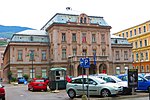
The Eternal flame (Serbo-Croatian: Vječna vatra, Вјечна ватра) is a memorial to the military and civilian victims of the Second World War in Sarajevo, Bosnia and Herzegovina. The memorial was dedicated on 6 April 1946, the first anniversary of the liberation of Sarajevo from the four-year-long occupation by Nazi Germany and the fascist Independent State of Croatia. The memorial was designed by architect Juraj Neidhardt and is located in the former Landesbank building at the center of Sarajevo at the junction of Mula Mustafa Bašeskije, Titova and Ferhadija streets.The attendees of the memorial come every April 6 to lay flowers and pay their respects in memory of liberators of the city and victims of both World War II and the 1992–1996 Siege of Sarajevo, which began around this date.

Excerpt from the Wikipedia article Eternal flame (Sarajevo) (License: CC BY-SA 3.0, Authors, Images).

Eternal flame (Sarajevo)
Ferhadija, Sarajevo Drvenija (Centar Municipality)

Geographical coordinates (GPS) Address External links Nearby Places
placeShow on map

Wikipedia: Eternal flame (Sarajevo)Continue reading on Wikipedia

Geographical coordinates (GPS)

Latitude Longitude
N 43.858861111111 ° E 18.421861111111 °
placeShow on map

Address

Vječna vatra

Ferhadija
71144 Sarajevo, Drvenija (Centar Municipality)
Federation of Bosnia and Herzegovina, Bosnia and Herzegovina
mapOpen on Google Maps

linkWikiData (Q3490665)
linkOpenStreetMap (1588411957)

Vjecna vatra, Sarajevo
Share experience

Nearby Places

Markale massacres
Markale massacres

The Markale market shelling or Markale massacres were two separate bombardments, with at least one of them confirmed to have been carried out by the Army of Republika Srpska, targeting civilians during the siege of Sarajevo in the Bosnian War. They occurred at the Markale (marketplace) located in the historic core of Sarajevo, the capital of Bosnia and Herzegovina. The first occurred on 5 February 1994; 68 people were killed and 144 more were wounded by a 120-millimetre (4.7 in) mortar. The second occurred on 28 August 1995 when five mortar shells launched by Army of Republika Srpska killed 43 people and wounded 75 others. The latter attack was the alleged reason for NATO air strikes against Bosnian Serb forces that would eventually lead to the Dayton Peace Accords and the end of the war in Bosnia and Herzegovina. The responsibility of the Army of the Republika Srpska for the first shelling is contested, since investigations to establish the location from where the shells had been fired led to ambiguous results. Serb forces claimed that the Bosnian army had actually shelled its own people in order to provoke intervention of Western countries on their side. The International Criminal Tribunal for the former Yugoslavia (ICTY) in its appeal judgement of Stanislav Galić in 2006 summarized the evidence and ruled that the conclusion that the shells had been fired from a location occupied by Serb forces was a reasonable one; nevertheless, Radovan Karadžić during his trial before ICTY tried to use this claim to his defence, but was found guilty.