place

Dr. Sun Yat Sen Municipal Park

Gardens in MacauMonuments and memorials to Sun Yat-senUrban public parks in Macau
Sun Yat Sen Statue in Jardim Municipal Dr. Sun Yat Sen

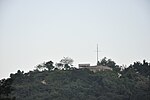
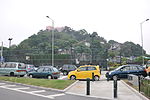
Dr. Sun Yat Sen Municipal Park (Chinese: 紀念孫中山市政公園; Portuguese: Parque Municipal Dr. Sun Yat Sen) is an urban park in Nossa Senhora de Fátima, Macau, China. The park is named for the founding father of the Republic of China, Dr Sun Yat Sen. The park is a 70,000 square meters (17.3 acres) urban park located in northern Macau in Our Lady of Fatima Parish along the border with Zhuhai, Mainland China. The park is located next to Canal dos Patos, but access to the former canal is closed off, and Barrier Gate. It was originally called Canal dos Patos Park to commemorate the friendship between China and Portugal in 1987. The park is one of forty three parks in the world to bear this name. The park features: old gate that marked the entrance to Macau from the mainland aviary Victorian greenhouse flower gardens feng shui forest swimming pool playground multi use sports fields

Excerpt from the Wikipedia article Dr. Sun Yat Sen Municipal Park (License: CC BY-SA 3.0, Authors, Images).

Dr. Sun Yat Sen Municipal Park
關閘緊急道路 Arruamento de Emergência das Portas do Cerco,

Geographical coordinates (GPS) Address Nearby Places
placeShow on map

Wikipedia: Dr. Sun Yat Sen Municipal ParkContinue reading on Wikipedia

Geographical coordinates (GPS)

Latitude Longitude
N 22.216199 ° E 113.545059 °
placeShow on map

Address

關閘緊急道路 Arruamento de Emergência das Portas do Cerco
519020 , 關閘 Portas do Cerco
Macau, China
mapOpen on Google Maps

Sun Yat Sen Statue in Jardim Municipal Dr. Sun Yat Sen
Share experience

Nearby Places

Mong-Há Fort
Mong-Há Fort

Mong-Há Fort (Chinese: 望廈炮台; Portuguese: Fortaleza de Mong-Há) is a fort on Mong-Há Hill, Nossa Senhora de Fátima, Macau, China. The fort is part of a greater military reservation – the Bairro Militar de Mong-Há, which included the Quartel de Mong-Há (Mong-Há Barracks). The Bairro Militar is bound by the Rua Francisco Xavier Pereira and the Colina de Mong-Há. The main fort complex was erected 1849 by Governor Ferreira do Amaral to protect the Macau's northern sector as precaution against a possible Chinese invasion following the First Opium War between Britain and China (1839–1842). The fort's construction began in 1849 and was completed in 1864/66. The Quartel de Mong-Há was constructed in the 1920s. With the complete withdrawal of the Portuguese military establishment in the 1960s following the Sino-Portuguese rapprochement, the fort and the Bairro Militar were deactivated, with the former being turned over to the Instituto de Formação Turística de Macau in the 1980s. In June 1997, the area surrounding the fort was transformed into the Jardim Municipal de Mong-Há. With an overall area of 650 square meters, the brick-walled fort held ten artillery pieces with a firing range capable of reaching the Portas do Cerco. Along with the barracks for Portuguese troops of African origin (Landins), the fort also included a lookout post and a munitions dump. The Quartel de Mong-Há occupied an area of 2244 square meters and was built in the style of 1920s Southern European and Modernist architecture. The government of Macau demolished the Quartel de Mong-Há and the neighboring Escola Keang Peng and put in their place public housing in the name of public security in late 2008.