place

Cloverdale, Lane County, Oregon

1855 establishments in Oregon TerritoryLane County, Oregon geography stubsPopulated places established in 1855Unincorporated communities in Lane County, OregonUnincorporated communities in Oregon
Use mdy dates from July 2023

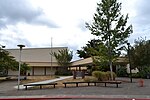
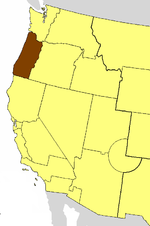
Cloverdale is an unincorporated community in Lane County, Oregon, United States. It is approximately 3 miles (5 km) northeast of Creswell on Oregon Route 222.Cloverdale was the site of one of the first sawmills in Lane County, built in 1851. A gristmill was added in 1852. A townsite was laid out at Cloverdale in 1855, but the plat was later canceled. Cloverdale was considered a "thing of the past" as early as 1884. At one time Cloverdale had a store, and a school, and a blacksmith forge. The former Cloverdale Methodist Episcopal Church now serves as a wedding chapel. The church was built in 1904, and later served Baptist and Mennonite congregations and then as a community hall. The building was purchased by the McKinlay family in 1999 and restored. The school building, constructed in 1911, is also still standing.

Excerpt from the Wikipedia article Cloverdale, Lane County, Oregon (License: CC BY-SA 3.0, Authors).

Cloverdale, Lane County, Oregon
Danstrom Road,

Geographical coordinates (GPS) Address Nearby Places
placeShow on map

Wikipedia: Cloverdale, Lane County, OregonContinue reading on Wikipedia

Geographical coordinates (GPS)

Latitude Longitude
N 43.924847 ° E -122.967302 °
placeShow on map

Address

Danstrom Road 36020
97426
Oregon, United States
mapOpen on Google Maps

Share experience

Nearby Places

Mount Pisgah Arboretum

The Mount Pisgah Arboretum (85 ha / 209 acres) is a non-profit arboretum and botanical garden located within the Howard Buford Recreation Area (930 ha / 2,300 acre), between the Coast Fork of the Willamette River and the slopes of Mount Pisgah near Eugene-Springfield, Oregon, United States. The Friends of Mount Pisgah Arboretum was established in 1973 when it began to construct trails, build bridges, remove invasive species, and publish newsletters. Wildflower and mushroom shows were first held in 1981; staff hiring began in the early 1980s. The arboretum's original mission was to have international plantings, however most of the early international donations were moved off site. This has changed to maintaining Pacific Northwest plant communities, offer environmental education programs, and provide for public enjoyment of its site.The arboretum includes 7 miles (11 km) of riverside trails with 23 bridges, riparian meadows, evergreen forests, a rare section of preserved oak savanna, Douglas-fir and incense-cedar forests on hillsides, a water garden, wildflower meadows, a wooded picnic area, and restrooms. The White Oak Pavilion took the place of the deteriorating quonset hut shelter in 2005. The arboretum's habitats are home to many species of native mosses, lichens, ferns, shrubs, and wildflowers. 67 families, 231 genera, and 339 plant species have been identified on the site. Wildlife includes bats, deer, coyote, foxes, and other small mammals, the endangered western pond turtle, the sensitive species red-legged frog, tree frogs, gopher and garter snakes, and lizards. Birding is a popular activity in the arboretum, which is home to a variety of migratory and resident songbirds, raptors, and waterfowl. The arboretum publishes a bird checklist, as well as a plant checklist, to aid visitors in identifying the local species. Parking is $4 per car and permits can be purchased at a self-service pay station.