place

Colonia Tabacalera

Neighborhoods in Mexico City
Frontón Mexico
Frontón Mexico

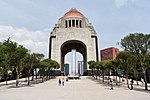
Colonia Tabacalera is a colonia or neighborhood in the Cuauhtémoc borough of Mexico City, on the western border of the city's historic center. It was created in the late 19th century along with other nearby colonias such as Colonia San Rafael and Colonia Santa María la Ribera. From the early 1900s, it became a mixture of mansions and apartment buildings, with major constructions such as the now Monument to the Revolution and the El Moro skyscraper built in the first half of the century. By the 1950s, the area had a bohemian reputation with writers, artists, and exiles living there. These included Fidel Castro and Ernesto “Che” Guevara, who met each other and began planning the Cuban Revolution there. Today, the colonia is in decline with problems such as prostitution, crime, street vending and traffic. However, the area is still home to some of the many traditional Mexican cantinas that populated it in its heyday.

Excerpt from the Wikipedia article Colonia Tabacalera (License: CC BY-SA 3.0, Authors, Images).

Colonia Tabacalera
Plaza de la República, Mexico City

Geographical coordinates (GPS) Address Nearby Places
placeShow on map

Wikipedia: Colonia TabacaleraContinue reading on Wikipedia

Geographical coordinates (GPS)

Latitude Longitude
N 19.436161111111 ° E -99.154013888889 °
placeShow on map

Address

Museo de la Revolucion Mexicana

Plaza de la República
06030 Mexico City
Mexico
mapOpen on Google Maps

Frontón Mexico
Frontón Mexico
Share experience

Nearby Places

Paseo de la Reforma
Paseo de la Reforma

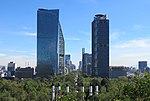
Paseo de la Reforma (translated as "Promenade of the Reform") is a wide avenue that runs diagonally across the heart of Mexico City. It was designed by Ferdinand von Rosenzweig in the 1860s and modeled after the great boulevards of Europe, such as the Ringstraße in Vienna and the Champs-Élysées in Paris. After the French intervention in Mexico overthrew the constitutional President Benito Juárez, the newly crowned Emperor Maximilian made his mark on the conquered city. He commissioned a grand avenue linking the city center with his imperial residence, Chapultepec Castle, which was then on the southwestern edge of town. The project was originally named Paseo de la Emperatriz ("Promenade of the Empress") in honor of Maximilian's consort Empress Carlota. After her return to Europe and Maximilian's subsequent execution, the restored Juárez government renamed the Paseo in honor of the Reform War. It is now home to many of Mexico's tallest buildings such as the Torre Mayor and others in the Zona Rosa. More modern extensions continue the avenue at an angle to the old Paseo. To the northeast it continues toward Tlatelolco, where it changes its name near the Plaza de las Tres Culturas. There it divides into Calzada de Guadalupe and Calzada de los Misterios that continue toward La Villa. Its western portion going west from Chapultepec Park passes south of Polanco on its way through the affluent neighborhood of Lomas de Chapultepec and then into Cuajimalpa and Santa Fe on the outskirts of the city, although when it reaches this point it is more a highway than a promenade.

Antimonumento +43
Antimonumento +43

An antimonumento was installed in front of the Superior Court of Justice of Mexico City, on the median strip of Paseo de la Reforma Avenue, in the Cuauhtémoc borough of Mexico City. The work included the installation of a red number 43 made of metal along with a plus symbol, in reference to the forty-three students kidnapped—and possibly killed—in Iguala, Guerrero, in 2014 after being arrested for allegedly committing criminal offenses, plus the six students and witnesses killed during that event, and to honor the more than 150,000 people killed since the start of the Mexican drug war and the 30,000 disappeared persons reported by 2015. The anti-monument was installed by peaceful protesters during a demonstration on 26 April 2015 as a plea for justice and to prevent the case from being forgotten by the authorities and society. The sculpture became the first of its kind in Mexico and would inspire the installation of other guerrilla-like memorials throughout the city and in other states of the country. The artwork was never given an official name and those who installed it referred to it simply as either Antimonumento or +43. After the subsequent installation of other unnamed anti-monuments, like the Antimonumento +65 and the Antimonumento +72, the Antimonumento +43 received its name after its physical characteristics. Demonstrators added the slogan of those seeking justice for the case ("Because they were taken alive, we want them back alive!") to the border of the sidewalk and subsequently installed a complement in front of both elements, a concrete turtle with forty-three rocks on its shell with little turtles painted with the names of each of the disappeared on them.