place

JAR Stadium

Asian sports venue stubsBuildings and structures in TashkentFootball venues in UzbekistanSport in TashkentUzbekistani building and structure stubs
Uzbekistani sport stubs
Стадион
Стадион "Джар"

JAR Stadium is a football stadium, located in the capital of Uzbekistan, in Tashkent. It is part of the JAR Sport Complex. The stadium seats 8,500 spectators. JAR Stadium opened in 1998. It was renovated in 2005. At the end of 2008, when the MHSK Stadium was demolished, the Bunyodkor football club temporarily moved to the Jar Stadium, and even after building its new Bunyodkor Stadium (now Milliy Stadium) in 2013, the club held some home matches at this stadium the end of 2015. In 2012, during the renovation of the Pakhtakor Stadium, at this stadium, Pakhtakor played their home games for the floor of the season. In addition, the national, olympic, youth and women teams of Uzbekistan hold some matches at this stadium. From the season of 2016, the stadium has been rented by the club - Obod. Also at the stadium, the women's national football teams of Uzbekistan, different in age, hold their own matches. The JAR Stadium is also one of the bases of the national team of Uzbekistan and the main training stadium for preparations for matches and camps. In 2009, the famous Portuguese football player Cristiano Ronaldo held a master class at the Jar stadium. Ronaldo conducted master class for young football players at the Bunyodkor’s Jar stadium and showed his tricks to fans, who came to stadium this day.

Excerpt from the Wikipedia article JAR Stadium (License: CC BY-SA 3.0, Authors, Images).

JAR Stadium
Sakichmon Street, Tashkent

Geographical coordinates (GPS) Address Nearby Places
placeShow on map

Wikipedia: JAR StadiumContinue reading on Wikipedia

Geographical coordinates (GPS)

Latitude Longitude
N 41.321654 ° E 69.230561 °
placeShow on map

Address

JAR sport majmuasi

Sakichmon Street
100000 Tashkent
Uzbekistan
mapOpen on Google Maps

Стадион
Стадион "Джар"
Share experience

Nearby Places

Peoples' Friendship Palace

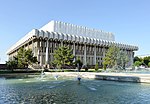
The Peoples' Friendship Palace (Uzbek: Xalqlar doʻstligi saroyi, Russian: Дворец Дружбы народов) is the concert and cinema hall in Tashkent, capital city of Uzbekistan. The building was designed by architect Yevgeny Rozanov from the Moscow Architectural Institute who one decade prior to that worked on the city's Lenin Museum, modern day State Museum of History of Uzbekistan. The building was completed in 1981. As the largest cinema and concert hall in the country the palace provides seating for up to 6,000 people. The palace is named in the memory of solidarity and friendship of volunteers who came to the city after the devastating 1966 Tashkent earthquake. Up until 2020 the palace is represented on the 100 Uzbekistani sum banknote. Initial plans for the new palace were developed already in 1971. The interior of the building was decorated with ceiling lights, chandeliers, large plaster panels and with three monumental florentine mosaics, named "Peoples' Friendship", "Holiday" and "Land of Flowers", on the banquet hall walls. The building's façade and decorations draw inspiration from national ornamental patterns, reminiscent of muqarnas elements found in local architecture. Local marble, as well as Nurota and G'ozg'on marbles, were used in the construction. Today, the palace is used for various events such as congresses, conferences, festivals, and concerts. Official ceremonies for foreign state representatives are also held in the concert hall. The treaty leading to the establishment of the post-Soviet regional Collective Security Treaty Organization was signed at the palace in 1992 while in 2004 the palace hosted the summit of the Shanghai Cooperation Organisation. In April of 2008 the body known as the Republican Commission on the Standardization of Toponyms issued the decision No. 07-5-16 after which the palace was renamed to the "Palace of Arts Istiklol". The decision was nevertheless reversed in when on 26 April 2018 President of Uzbekistan Shavkat Mirziyoyev suggested reintroduction of the previous name followed by the formal decision by the Tashkent City Council of People's Deputies on May 3, 2018.