place

Lilac Arboretum and Children's Forest

Arboreta in IowaArboretum stubsBotanical gardens in IowaCentral Iowa geography stubsDes Moines, Iowa stubs
Geography of Des Moines, IowaProtected areas of Polk County, IowaTourist attractions in Des Moines, IowaUnited States garden stubs

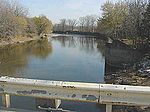
The Lilac Arboretum and Children's Forest, sometimes also known as the Ewing Lilac Arboretum, is located in Ewing Park at 5300 Indianola Avenue, Des Moines, Iowa. The arboretum contains more than 1,400 lilac bushes representing 120 varieties.

Excerpt from the Wikipedia article Lilac Arboretum and Children's Forest (License: CC BY-SA 3.0, Authors).

Lilac Arboretum and Children's Forest
Indianola Avenue, Des Moines

Geographical coordinates (GPS) Address Nearby Places
placeShow on map

Wikipedia: Lilac Arboretum and Children's ForestContinue reading on Wikipedia

Geographical coordinates (GPS)

Latitude Longitude
N 41.536 ° E -93.579 °
placeShow on map

Address

Indianola Avenue 5246
50315 Des Moines
Iowa, United States
mapOpen on Google Maps

Share experience

Nearby Places

East Des Moines Industrial Historic District

The East Des Moines Industrial Historic District is a nationally recognized historic district located in the East Village of Des Moines, Iowa, United States, directly east of the Downtown Des Moines area. At the time of its nomination it consisted of 45 resources, which included 31 contributing buildings, four contributing sites, three contributing structures, six non-contributing buildings and two non-contributing structures. It also includes the Northwestern Hotel, which was individually listed on the National Register of Historic Places (NRHP). The historic district was listed on the NRHP in 2017.The period of significance is c. 1874, when the oldest building in the district was built, to 1956. It is a rare-surviving group of manufacturing, warehousing, and railroad-related properties in the city. In 1957 plans for what is now Interstate 235 were announced. Urban Renewal districts were added to this area in subsequent decades, which brought an end to investment in the district. The contributing buildings are the last remaining warehouse and manufacturing buildings that are left on the near east side of Des Moines. The contributing structures include two railroad bridges and a pump house and the contributing sites are the locations of extant or former railroad rail bed and rail siding segments. The district's "buildings, structures, and sites that show variety in architectural appearance, materials, and technological progression reflective of the period of significance."