place

Civic Center Historic District (Des Moines, Iowa)

Art Deco architecture in IowaBeaux-Arts architecture in IowaBuildings and structures in Des Moines, IowaGovernment buildings on the National Register of Historic Places in IowaHistoric districts in Des Moines, Iowa
Historic districts on the National Register of Historic Places in IowaNRHP infobox with nocatNational Register of Historic Places in Des Moines, Iowa
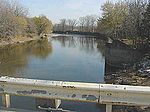
Court Avenue Bridge
Court Avenue Bridge

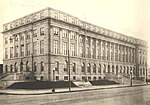
The Civic Center Historic District is located in downtown Des Moines, Iowa, United States. It flanks both the Des Moines and Raccoon Rivers and their confluence. The district has been listed on the National Register of Historic Places since 1988. It is part of The City Beautiful Movement and City Planning in Des Moines, Iowa 1892—1938 MPS.

Excerpt from the Wikipedia article Civic Center Historic District (Des Moines, Iowa) (License: CC BY-SA 3.0, Authors, Images).

Civic Center Historic District (Des Moines, Iowa)
Meredith Trail, Des Moines

Geographical coordinates (GPS) Address Nearby Places
placeShow on map

Wikipedia: Civic Center Historic District (Des Moines, Iowa)Continue reading on Wikipedia

Geographical coordinates (GPS)

Latitude Longitude
N 41.583055555556 ° E -93.615833333333 °
placeShow on map

Address

Martin Luther King Jr. Parkway Bridge

Meredith Trail
50309 Des Moines
Iowa, United States
mapOpen on Google Maps

Court Avenue Bridge
Court Avenue Bridge
Share experience

Nearby Places

United States District Court for the Southern District of Iowa

The United States District Court for the Southern District of Iowa (in case citations, S.D. Iowa) has jurisdiction over forty-seven of Iowa's ninety-nine counties. It is subject to the Eighth Circuit Court of Appeals (except for patent claims and claims against the U.S. government under the Tucker Act, which are appealed to the Federal Circuit). The United States District Court for the District of Iowa, established on March 3, 1845, by 5 Stat. 789, was subdivided into the current Northern and Southern Districts on July 20, 1882, by 22 Stat. 172. Initially, one judge was assigned to each District. By 1927, a backlog of unresolved cases dating back to 1920 had developed. In October 1927, Judge Martin Joseph Wade announced that he "was through" attempting to try cases requiring more than one day, but urged Congress to create a second judgeship for the Southern District of Iowa. On January 19, 1928, President Calvin Coolidge signed into law a bill that authorized a second judgeship for the District, with the proviso that when the existing judgeship (held by Judge Wade) becomes vacant, it shall not be filled unless authorized by Congress. When the original judgeship became vacant upon Wade's death in 1931, Congress did not act to reauthorize it, leaving the Southern District with a single judgeship. A second judgeship in the Southern District was not reauthorized by Congress until 1979, with the creation of the judgeship first held by Harold Duane Vietor.In 1962, Congress created a new judgeship that would be shared by the Northern and Southern Districts of Iowa. The shared judgeship was replaced in 1990 when the shared judgeship (then held by Judge Donald Eugene O'Brien) was assigned entirely to the Northern District, and a third Southern District judgeship (first held by Judge Ronald Earl Longstaff) was authorized.In 2012, Judge Stephanie Marie Rose was the first woman appointed to the bench in the Southern District of Iowa.It is headquartered at the United States Courthouse in Des Moines, with satellite facilities in Council Bluffs and at the United States Court House in Davenport. As of November 16, 2021, the United States Attorney is Richard D. Westphal.

East Des Moines Industrial Historic District

The East Des Moines Industrial Historic District is a nationally recognized historic district located in the East Village of Des Moines, Iowa, United States, directly east of the Downtown Des Moines area. At the time of its nomination it consisted of 45 resources, which included 31 contributing buildings, four contributing sites, three contributing structures, six non-contributing buildings and two non-contributing structures. It also includes the Northwestern Hotel, which was individually listed on the National Register of Historic Places (NRHP). The historic district was listed on the NRHP in 2017.The period of significance is c. 1874, when the oldest building in the district was built, to 1956. It is a rare-surviving group of manufacturing, warehousing, and railroad-related properties in the city. In 1957 plans for what is now Interstate 235 were announced. Urban Renewal districts were added to this area in subsequent decades, which brought an end to investment in the district. The contributing buildings are the last remaining warehouse and manufacturing buildings that are left on the near east side of Des Moines. The contributing structures include two railroad bridges and a pump house and the contributing sites are the locations of extant or former railroad rail bed and rail siding segments. The district's "buildings, structures, and sites that show variety in architectural appearance, materials, and technological progression reflective of the period of significance."