place

KAIST

1971 establishments in South KoreaAll pages needing factual verificationDynamic listsEducational institutions established in 1971Engineering universities and colleges in South Korea
KAISTNational universities and colleges in South KoreaUniversities and colleges in Daejeon
KAIST logo
KAIST logo

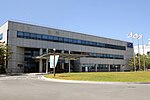
The Korea Advanced Institute of Science and Technology (KAIST) is a national research university located in Daedeok Innopolis, Daejeon, South Korea. KAIST was established by the Korean government in 1971 as the nation's first public, research-oriented science and engineering institution. KAIST is considered to be one of the most prestigious universities in the nation. KAIST has been internationally accredited in business education, and hosts the Secretariat of the Association of Asia-Pacific Business Schools (AAPBS). KAIST has 10,504 full-time students and 1,342 faculty researchers (as of the Fall 2019 Semester) and had a total budget of US$765 million in 2013, of which US$459 million was from research contracts. In 2007, KAIST partnered with international institutions and adopted dual degree programs for its students. Its partner institutions include the Technical University of Denmark, Carnegie Mellon University, the Georgia Institute of Technology, the Technical University of Berlin, and the Technical University of Munich.

Excerpt from the Wikipedia article KAIST (License: CC BY-SA 3.0, Authors, Images).

Geographical coordinates (GPS)

Latitude Longitude
N 36.372 ° E 127.363 °
placeShow on map

Address

Marktplatz

Marktplatz
06217 , Neumarkt (Vorstadt) (Merseburg)
Sachsen-Anhalt, Deutschland
mapOpen on Google Maps

KAIST logo
KAIST logo
Share experience

Nearby Places

Korea Research Institute of Bioscience and Biotechnology

Korea Research Institute of Bioscience and Biotechnology (KRIBB) is a government research institute in Daejeon, South Korea. It is dedicated to biotechnology research across a broad span of expertise, from basic studies for the fundamental understanding of life phenomena to applied studies such as drug discovery, novel biomaterials, integrated biotechnology and bioinformation. KRIBB was established in 1985. Its accomplishments include the advancement of welfare and medical technology, an increase in food production, a cleaner environment and new bio-materials and energy sources. It has identified reasons for the failure of animal cloning, conducted a comparative study of chimpanzee genes and successfully analyzed the structure of the reactive oxygen species switch protein, which became the first study by Korean scholars to be published in Cell, an international scientific journal. The institute was ranked first in the discovery of new microorganisms, including the indigenous microorganisms of the Dokdo Islets, for four consecutive years. Its recent accomplishments include the development of a genome capable of controlling cancer cell proliferation and the identification of a neuropeptide Y-based growth control mechanism, with possibilities for new treatments for cancer, diabetes, obesity and ageing. Nano–bio sensor research led to the development of the world's smallest surface plasmon resonance biochip.