place

Huntington Beach State Park

Commons category link is locally definedEducation in Georgetown County, South CarolinaHuntington familyMuseums in Georgetown County, South CarolinaNatural history museums in South Carolina
Nature centers in South CarolinaProtected areas of Georgetown County, South CarolinaState parks of South CarolinaTourist attractions in Myrtle Beach, South CarolinaUse mdy dates from August 2023
Ardea herodias Huntington Beach State Park, South Carolina, USA 8

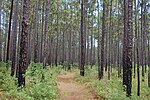
Huntington Beach State Park is a 2500 acre coastal preserve and state park near Murrells Inlet, in Georgetown County, South Carolina. It has a large sandy beach, few beach-goers, and numerous wild birds to watch over the seasons.

Excerpt from the Wikipedia article Huntington Beach State Park (License: CC BY-SA 3.0, Authors, Images).

Huntington Beach State Park
Jetty Drive,

Geographical coordinates (GPS) Address Nearby Places
placeShow on map

Wikipedia: Huntington Beach State ParkContinue reading on Wikipedia

Geographical coordinates (GPS)

Latitude Longitude
N 33.513888888889 ° E -79.061111111111 °
placeShow on map

Address

Jetty Drive

Jetty Drive

South Carolina, United States
mapOpen on Google Maps

Ardea herodias Huntington Beach State Park, South Carolina, USA 8
Share experience

Nearby Places

Sandy Island, South Carolina

Sandy Island is the name of a small unincorporated community in Georgetown County, South Carolina, United States, and a larger island between the Pee Dee and Waccamaw Rivers that has been preserved as a refuge and nature center. The island is about 9,000 acres (36 km2) of a prehistoric sand dune. It is bounded east and west by the rivers, on the north by Bull Creek, and on the south by Thoroughfare Creek. The northern part of the island is higher and is mostly a longleaf pine forest, which provides a refuge for the endangered red-cockaded woodpecker and numerous other species of plants and animals. About 9,000 acres (36 km2) of the island has been purchased by The Nature Conservancy for permanent protection from development. On the southern, lower end of the island are the remnants of old rice plantations, with the watergates and earthwork canals, built by African enslaved people who were skilled in rice culture. Such development was used to manage the water supply for irrigating the rice fields. A small community in the south is made up of a few families who are descendants of former slaves. The island is only accessible by boat, and workers and school children commute to the mainland daily for work and school. Because of its resources, the island is regularly visited by naturalists, planters, archaeologists and geologists. Brookgreen Gardens runs daily "scenic" boat rides close to the island. Tours of the southern end are available by private tour company.

All Saints Church (Pawleys Island, South Carolina)

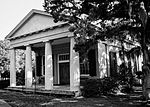
All Saints Church Pawleys Island is a historic church complex and national historic district located on Pawleys Island, Georgetown County, South Carolina. The district encompasses three contributing buildings and one contributing site—the sanctuary, cemetery, rectory, and chapel. In 2004, it left the Episcopal Church to join the Diocese of the Carolinas, now part of the Anglican Church in North America, a denomination within the Anglican realignment movement. The sanctuary, built 1916–1917, the fourth to serve this congregation, is significant as an excellent example of the Classical Revival style, adapting the design of the church's 19th century sanctuary which burned in 1915. It is a one-story rectangular brick building sheathed in scored stucco. It has an engaged pedimented portico supported by four fluted Greek Doric order columns. A Doric frieze, composed of triglyphs, metopes, and guttae, runs under the cornice around the building on three sides. The church has a large center aisle sanctuary with a coved tray ceiling. The church cemetery, established in the 1820s, is significant for the persons buried there, many of whom were the leading public figures of antebellum Georgetown County. It is also significant a collection of outstanding gravestone art from about 1820 to 1900. The church rectory, built in 1822, is an intact example of a Carolina I-house. Its first congregation was formed in 1739, and the church has been located at this site since then. Associated with the church is the separately listed Cedar Grove Plantation Chapel.It was added to the National Register of Historic Places in 1991.