place

National University, Bangladesh

1992 establishments in BangladeshEducational institutions established in 1992National University, BangladeshOrganisations based in GazipurPublic universities in Bangladesh
Universities and colleges in Gazipur District

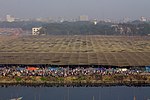
National University (NU; Bengali: জাতীয় বিশ্ববিদ্যালয়) is a public collegiate university of Bangladesh that was established in 1992 by an Act of Parliament as an affiliating university of the country to impart graduate and post-graduate level education to students through its affiliated colleges, schools and professional institutions throughout the country. The number of colleges under the NU is 2,257. Among these, 555 are government colleges. A total of 881 colleges offer honors courses. It is the second-largest university in the world in terms of enrollment. The headquarters is in Gazipur, on the outskirts of Dhaka. After its establishment, the university began affiliating with association degree-awarding colleges, many of which were previously affiliated with the University of Dhaka, University of Rajshahi, University of Chittagong and Shahjalal University of Science and Technology.

Excerpt from the Wikipedia article National University, Bangladesh (License: CC BY-SA 3.0, Authors).

National University, Bangladesh
Dhaka-Mymensingh, Gazipur Board Bazar

Geographical coordinates (GPS) Address Website Nearby Places
placeShow on map

Wikipedia: National University, BangladeshContinue reading on Wikipedia

Geographical coordinates (GPS)

Latitude Longitude
N 23.9499 ° E 90.3808 °
placeShow on map

Address

জাতীয় বিশ্ববিদ্যালয়

Dhaka-Mymensingh
1701 Gazipur, Board Bazar
Dhaka Division, Bangladesh
mapOpen on Google Maps

Website
nu.ac.bd

linkVisit website

Share experience

Nearby Places

Bishwa Ijtema
Bishwa Ijtema

The Bishwa Ijtema (Bengali: বিশ্ব ইজতেমা, lit. 'Global congregation') is an annual gathering of Muslims in Tongi, by the banks of the River Turag, in the outskirts of Dhaka, Bangladesh. The Ijtema is considered a demonstration of Muslim unity, solidarity, mutual love and respect and an opportunity to reiterate their commitment to Islamic values. It is the biggest festival by population in Bengali culture, one of the largest peaceful gatherings in the world, and the second-largest Muslim gathering, with 5 million adherents, after the Arba'een Pilgrimage's 15–20 million attendees in Iraq, both surpassing the 2–3 million worshipers who participate in the Hajj, considered to be one of the five pillars of Islam, in Saudi Arabia. Bishwa Ijtema is a modern event where Muslim participation is voluntary.The Ijtema is a prayer meeting spread over three days, during which attending devotees perform daily prayers while listening to scholars reciting and explaining verses from the Quran, the central religious text. Speakers include Islamic scholars from various countries. It culminates in the Akheri Munajat (concluding supplication or final prayer), in which millions of devotees raise their hands and pray to Allah for world peace. Al-Quds Al-Arabi compared Ijtema with Kaaba to the poor people of the region.The Ijtema is non-political, and draws people of all persuasions. It is attended by devotees from 150 countries. The majority of its devotees come from across Bangladesh, the world's third-largest Muslim majority country. Despite being larger than Hajj, the obligatory Muslim pilgrimage, the voluntary Bishwa Ijtema remains largely unknown and underreported in the West. During the Ijtema, free meals and accommodation are provided by volunteers.