place

Janani O Gorbito Bornomala

2016 sculpturesBengali language movementBuildings and structures in DhakaMartyrs' monuments and memorialsOutdoor sculptures in Bangladesh
Sculptures of childrenStatues of womenWorks by Mrinal Haque
Sculpture ' Janani o Gorbito Bornomala' Dhaka

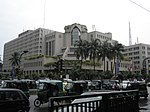
Janani O Gorbito Bornomala (Bengali: জননী ও গর্বিত বর্ণমালা, lit. 'Mother and proud albhabets') is a sculpture of a mother protesting while carrying her son's corpse. One of notable work of Mrinal Haque for Dhaka City. It is situated in front of the BTCL headquarter at the junction of Kazi Nazrul Islam Avenue near Bangla Motor, in Dhaka city's Paribagh. It was erected on the theme of Bangla language movement. The sculpture was inaugurated on February 20, 2016. This is one of sculptures erected by Haque's private funding.

Excerpt from the Wikipedia article Janani O Gorbito Bornomala (License: CC BY-SA 3.0, Authors, Images).

Janani O Gorbito Bornomala
Old Elephant Road, Dhaka Ramna

Geographical coordinates (GPS) Address Nearby Places
placeShow on map

Wikipedia: Janani O Gorbito BornomalaContinue reading on Wikipedia

Geographical coordinates (GPS)

Latitude Longitude
N 23.742723 ° E 90.395901 °
placeShow on map

Address

পুরাতন এলিফ্যান্ট রোড

Old Elephant Road
1234 Dhaka, Ramna
Dhaka Division, Bangladesh
mapOpen on Google Maps

Sculpture ' Janani o Gorbito Bornomala' Dhaka
Share experience

Nearby Places

2013 Shahbag protests

On 5 February 2013, protests began in Shahbag, Bangladesh, following demands for the execution of Abdul Quader Mollah, who had been sentenced to life imprisonment and convicted on five of six counts of war crimes by the International Crimes Tribunal of Bangladesh. Later demands included banning the Bangladesh Jamaat-e-Islami party from politics including election and a boycott of institutions supporting (or affiliated with) the party.Protesters considered Mollah's sentence too lenient given his crimes. Bloggers and online activists called for additional protests at Shahbag and joined the demonstration.Ruling party Awami League supported the protests. However, the main opposition party, the Bangladesh Nationalist Party (BNP), initially expressed its support for Jamaat-e-Islami, a political ally. However, the BNP cautiously welcomed the Shahbag protest while warning the government to not exploit the situation for political gain from the movement demanding capital punishment for the war criminals. A counter-protest, questioning the validity of the tribunal and the protest movement and demanding release of those accused and convicted, was called by Jamaat-e-Islami.During the protests, blogger Ahmed Rajib Haider was killed outside his house. On 1 March, five students of North South University were arrested, with those five 'confessing' their involvement in Rajib's killing.On 27 February 2013, the tribunal convicted Delwar Hossain Sayeedi of war crimes and sentenced him to death. Jamaat followers protested and there were violent clashes with police. About 60 people were killed in the confrontations; most were Jamaat-Shibir activists, and others were police and civilians.The movement received considerable criticism in Bangladesh and abroad for allegedly inciting violence and fascism by the use of slogans inciting violence. Death threats and calls for boycotts were made. It was accused of being politically motivated and was seen as disrupting public infrastructure.