place

Assemini

Cities and towns in SardiniaMunicipalities of the Metropolitan City of CagliariPages with Italian IPAPages with Sardinian IPA
Assemini san pietro
Assemini san pietro

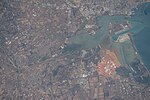
Assemini (Italian: [asˈsɛːmini]; Sardinian: Assèmini [aˈsemini]) is a comune (municipality) in the Metropolitan City of Cagliari in the Italian region Sardinia, located about 12 kilometres (7 mi) northwest of Cagliari in the plain of the Cixerri, Flumini Mannu and Sa Nuxedda rivers. It includes notable forest area which are part of the Sulcis Regional Park. It has also a long tradition in the production of ceramics, lasting from the Carthaginian domination. Assemini is part of the Cagliari metropolitan area and borders the following municipalities: Cagliari, Capoterra, Decimomannu, Elmas, Nuxis, San Sperate, Santadi, Sarroch, Sestu, Siliqua, Uta, Villa San Pietro.

Excerpt from the Wikipedia article Assemini (License: CC BY-SA 3.0, Authors, Images).

Assemini
Via Silvio Pellico,

Geographical coordinates (GPS) Address Nearby Places
placeShow on map

Wikipedia: AsseminiContinue reading on Wikipedia

Geographical coordinates (GPS)

Latitude Longitude
N 39.283333333333 ° E 9 °
placeShow on map

Address

Via Silvio Pellico 13
09032
Sardinia, Italy
mapOpen on Google Maps

Assemini san pietro
Assemini san pietro
Share experience

Nearby Places

Cagliari
Cagliari

Cagliari (, also UK: , US: , Italian: [ˈkaʎʎari] (listen); Sardinian: Casteddu [kasˈteɖːu]; Latin: Caralis) is an Italian municipality and the capital of the island of Sardinia, an autonomous region of Italy. Cagliari's Sardinian name Casteddu means castle. It has about 155,000 inhabitants, while its metropolitan city (including Cagliari and 16 other nearby municipalities) has more than 431,000 inhabitants. According to Eurostat, the population of the Functional urban area, the commuting zone of Cagliari, rises to 476,975. Cagliari is the 26th largest city in Italy and the largest city on the island of Sardinia. An ancient city with a long history, Cagliari has seen the rule of several civilisations. Under the buildings of the modern city there is a continuous stratification attesting to human settlement over the course of some five thousand years, from the Neolithic to today. Historical sites include the prehistoric Domus de Janas, very damaged by cave activity, a large Carthaginian era necropolis, a Roman era amphitheatre, a Byzantine basilica, three Pisan-era towers and a strong system of fortification that made the town the core of Spanish Habsburg imperial power in the western Mediterranean Sea. Its natural resources have always been its sheltered harbour, the often powerfully fortified hill of Castel di Castro, the modern Casteddu, the salt from its lagoons, and, from the hinterland, wheat from the Campidano plain and silver and other ores from the Iglesiente mines. Cagliari was the capital of the Kingdom of Sardinia from 1324 to 1848, when Turin became the formal capital of the kingdom (which in 1861 became the Kingdom of Italy). Today the city is a regional cultural, educational, political and artistic centre, known for its diverse Art Nouveau architecture and several monuments. It is also Sardinia's economic and industrial hub, having one of the biggest ports in the Mediterranean Sea, an international airport, and the 106th highest income level in Italy (among 8,092 comuni), comparable to that of several northern Italian cities.It is also the seat of the University of Cagliari, founded in 1607, and of the Roman Catholic Archdiocese of Cagliari, since the 5th century AD.