place

Grizzly Creek Fire

2020 Colorado wildfiresAugust 2020 events in the United StatesEagle County, ColoradoGarfield County, ColoradoSeptember 2020 events in the United States
Use mdy dates from September 2020Wildfires in Colorado
Grizzly Creek Fire 8.23.20 c

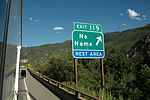
The Grizzly Creek Fire (also called the 120 Fire) was a wildfire that burned 32,631 acres (13,205 ha) in Glenwood Canyon in the state of Colorado in the United States. The fire first ignited on August 10, 2020 and was declared 100% contained on December 18, 2020. The Grizzly Creek fire's proximity to Interstate 70 resulted in a 13-day closure of the interstate. It threatened the Shoshone Generating Station and resulted in the evacuation of residences in the area, as well as closure of recreational land in portions of White River National Forest. The fire was ruled to be human-caused.

Excerpt from the Wikipedia article Grizzly Creek Fire (License: CC BY-SA 3.0, Authors, Images).

Geographical coordinates (GPS)

Latitude Longitude
N 39.572 ° E -107.266 °
placeShow on map

Address

Garfield County (Garfield)


Colorado, United States
mapOpen on Google Maps

Grizzly Creek Fire 8.23.20 c
Share experience

Nearby Places

Shoshone Generating Station

The Shoshone Generating Station is a hydroelectric power plant on the Colorado River east of Glenwood Springs, Colorado. In addition to its power output, the water rights the plant uses are among the oldest on the Colorado River, and play a major role in the flow of water to the Western Slope of Colorado. The Shoshone plant was constructed in the early 1900s, with its turbines installed in 1906 and power generation beginning in 1909. The plant has a maximum capacity of 15 MW from two 7.5 MW generators driven by two turbines, though typical power output is around 14 MW. Water to drive the turbines is drawn from the river at a dam about 2 miles (3.2 km) upstream of the powerplant, and carried through tunnels to penstocks above the station, after which it is returned to the river. Shoshone is owned and operated by Xcel Energy, and while its power output is comparatively small against most of the utility's generating stations, it is used to balance regional electricity needs.Shoshone holds water rights to 1,250 cubic feet (35 m3) per second of Colorado River water, which date back to 1902. This predates rights owned by entities on Colorado's Front Range, which draw water from where most of the state's precipitation falls on the Western Slope across the Continental Divide to major population centers east of the Rocky Mountains. By ensuring a consistent flow of water downstream on the river, Shoshone supports diverse sectors of the Western Slope economy, including river recreation, agriculture, and public utility use. The water rights have been largely preserved—in 2007, Xcel and Denver Water made a deal to reduce Shoshone's water rights to 704 cubic feet (19.9 m3) per second if warranted by low water levels during the spring snowmelt runoff season, prior to peak summer demand by recreation and agriculture. Otherwise, the original 1902 rights remained in effect, and were strengthened in 2016 when the Shoshone Outage Protocol was signed by a number of Colorado River stakeholders. The plan, an update to an addendum in a broader 2012 agreement, maintains the power plant's water rights even when electricity is not being generated—previously, when the plant was offline it yielded its water rights to claims that would otherwise hold lower priority.

Glenwood Springs station

The Glenwood Springs station is a railway station in Glenwood Springs, Colorado. It is served by Amtrak's California Zephyr, which runs between Chicago and Emeryville, California in the San Francisco Bay Area and is an overnight stop on Rocky Mountaineer's Rockies To Red Rocks luxury train service between Denver Colorado and Moab Utah. The Glenwood Springs station was originally built by the Denver and Rio Grande Western Railroad (D&RGW) in 1904, and sits close to the southern bank of the Colorado River. The station is composed of brick and Frying Pan River red sandstone, while the roof line is done in a jerkinhead, or Half-hip roof style. The entrance is flanked by medieval-inspired brick towers with pyramidal roofs. The Glenwood Railroad Museum occupies the former Ladies' Waiting Room.The station also serves as one of two Greyhound bus stops in Glenwood Springs. However, The Roaring Fork Transportation Authority city bus does not stop here.On June 7, 1977 Amtrak introduced the Pioneer, with service between Chicago and Seattle. On October 28, 1979, Amtrak initiated the Desert Wind service between Chicago and Los Angeles. Both trains serviced Glenwood Springs. In 1991, the Pioneer was rerouted through Wyoming, and no longer stopped in Glenwood Springs. Both the Desert Wind and the Pioneer were discontinued on May 10, 1997. The California Zephyr entered service on April 24, 1983, and services Glenwood Springs to this day. According to the Amtrak Fact Sheet (Colorado), Fiscal Year 2019, Glenwood Springs was the second busiest of the nine Colorado stations served by Amtrak.The station and the town feature in an episode of the BBC television series Around the World in 80 Days with Michael Palin.On August 15, 2021 luxury tourist railroad Rocky Mountaineer began using the station as an overnight stop for its Rockies to Red Rocks service.

Roaring Fork River
Roaring Fork River

Roaring Fork River is a tributary of the Colorado River, approximately 70 miles (110 km) long, in west central Colorado in the United States. The river drains a populated and economically vital area of the Colorado Western Slope called the Roaring Fork Valley or Roaring Fork Watershed, which includes the resort city of Aspen and the resorts of Aspen/Snowmass. It rises in the Sawatch Range in eastern Pitkin County, on the west side of Independence Pass on the continental divide. It flows northwest past Aspen, Woody Creek, and Snowmass. It receives the Fryingpan River at Basalt. 1.5 miles (2 km) below Carbondale, it receives the Crystal River from the south. It joins the Colorado in Glenwood Springs. The entire area that drains into the Roaring Fork River is known as the Roaring Fork Watershed. This area is 1,451 square miles (3,760 km2) and about the same size as the state of Rhode Island. The river flows through canyons along most of its route and is a popular destination for recreation whitewater rafting. The river supplies water through the Sawatch Range to the Twin Lakes Reservoir via the Twin Lakes Tunnel. Roaring Fork Conservancy is the watershed conservation organization for the Roaring Fork River and its tributaries. The Roaring Fork is a swift, deep, powerful river with very clear water. It is navigable by small craft throughout most of its length to its confluence with the Colorado. The mean annual flow is 1,206 cu ft/s (34.2 m3/s).