place

GES-2 (Moscow)

Buildings and structures in MoscowChimneys in RussiaCultural heritage monuments of regional significance in MoscowEnergy infrastructure completed in 1907Former power stations in Russia
Natural gas-fired power stations in RussiaUse mdy dates from May 2019
Municipal Album 1.152 Powerplant

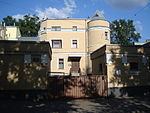
GES-2 (Russian: ГЭС-2), also known as MGES-2 and Tramvaynaya (Russian: Трамвайная, or Tram power station) – is a decommissioned power station on the Bolotnaya Embankment, in the Yakimanka District of Moscow. Originally launched in 1907, it was the second major power station built in Moscow. GES-2 operated from 1907 to 2014. After its closure, GES-2 was sold to the V-A-C Foundation, who initiated a restoration and renovation project to convert the main building and surrounding area into a new cultural venue for the city of Moscow. GES-2 is being redesigned by Renzo Piano Building Workshop.

Excerpt from the Wikipedia article GES-2 (Moscow) (License: CC BY-SA 3.0, Authors, Images).

GES-2 (Moscow)
Bolotnaya Naberezhnaya, Moscow Yakimanka District

Geographical coordinates (GPS) Address Nearby Places
placeShow on map

Wikipedia: GES-2 (Moscow)Continue reading on Wikipedia

Geographical coordinates (GPS)

Latitude Longitude
N 55.742777777778 ° E 37.61275 °
placeShow on map

Address

ГЭС-2

Bolotnaya Naberezhnaya
119072 Moscow, Yakimanka District
Moscow, Russia
mapOpen on Google Maps

Municipal Album 1.152 Powerplant
Share experience

Nearby Places

Russian International Affairs Council

The Russian International Affairs Council (RIAC, Russian: Российский совет по международным делам) is a non-profit academic and diplomatic think tank established by the presidential decree dated 2 February 2010. The founders of the RIAC are the Ministry of Foreign Affairs of the Russian Federation, Ministry of Education and Science, Russian Academy of Science, the Russian Union of Industrialists and Entrepreneurs and Russian news agency Interfax. The Russian International Affairs Council was founded on orders of then-President Dmitry Medvedev to contribute to Russia's soft power efforts.The RIAC activities are aimed at strengthening peace, friendship and solidarity between peoples, preventing international conflicts and promoting conflict resolution and crisis settlement. It operates as a link between the state, scholar community, business, and civil society in an effort to find foreign policy solutions to current international issues. The RIAC is one of Russia's public diplomacy tools. The RIAC mission is to facilitate Russia's peaceful integration into the global community, partly through greater cooperation between Russian scientific institutions and foreign think tanks/scholars on major international issues. The council's strategic mission is to facilitate communication between government officials and the expert, business and civil communities when elaborating foreign policy decisions.