place

Saskatoon John G. Diefenbaker International Airport

Airports of the British Commonwealth Air Training PlanCertified airports in SaskatchewanJohn DiefenbakerNational Airports SystemPages with disabled graphs
Transport in SaskatoonUse Canadian English from July 2022Use mdy dates from July 2022
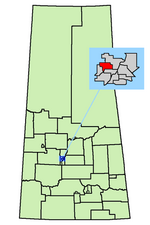
Saskatoon 110
Saskatoon 110

Saskatoon John G. Diefenbaker International Airport (IATA: YXE, ICAO: CYXE) is an international airport located 3 nautical miles (5.6 km; 3.5 mi) north-west of downtown Saskatoon, Saskatchewan, though still within its city limits. The airport is served by passenger, courier and air freight operators. It is named for John Diefenbaker, the 13th prime minister of Canada. The airport has nine passenger bridges, three ground loading positions, 32 check-in points, and a customs/immigration arrivals area. The airport is classified as an airport of entry by Nav Canada and is staffed by the Canada Border Services Agency (CBSA). CBSA officers at this airport can handle aircraft with no more than 200 passengers. However, they can handle up to 300 if the aircraft is unloaded in stages.In 2019, the airport saw a total of 1.49 million passengers pass through, a decrease of 1.9% over the previous year.

Excerpt from the Wikipedia article Saskatoon John G. Diefenbaker International Airport (License: CC BY-SA 3.0, Authors, Images).

Saskatoon John G. Diefenbaker International Airport
Saskatoon Confederation

Geographical coordinates (GPS) Address Nearby Places
placeShow on map

Wikipedia: Saskatoon John G. Diefenbaker International AirportContinue reading on Wikipedia

Geographical coordinates (GPS)

Latitude Longitude
N 52.170833333333 ° E -106.7 °
placeShow on map

Address

Confederation


S7L 3B5 Saskatoon, Confederation
Saskatchewan, Canada
mapOpen on Google Maps

Saskatoon 110
Saskatoon 110
Share experience

Nearby Places

Saskatoon
Saskatoon

Saskatoon () is the largest city in the Canadian province of Saskatchewan. It straddles a bend in the South Saskatchewan River in the central region of the province. It is located along the Trans-Canada Yellowhead Highway, and has served as the cultural and economic hub of central Saskatchewan since its founding in 1882 as a Temperance colony.With a 2021 census population of 266,141, Saskatoon is the largest city in the province, and the 17th largest Census Metropolitan Area in Canada, with a 2021 census population of 317,480. Saskatoon is home to the University of Saskatchewan, the Meewasin Valley Authority (which protects the South Saskatchewan River and provides for the city's popular riverbank park spaces), and Wanuskewin Heritage Park (a National Historic Site of Canada and UNESCO World Heritage applicant representing 6,000 years of First Nations history). The Rural Municipality of Corman Park No. 344, the most populous rural municipality in Saskatchewan, surrounds the city and contains many of the developments associated with it, including Wanuskewin. Saskatoon is named after the saskatoon berry which is native to the region, and is itself derived from the Cree misâskwatômina. The city has a significant Indigenous population and several urban Reserves. The city has nine river crossings and is nicknamed "Paris of the Prairies" and "Bridge City". Historic neighbourhoods of Saskatoon include Nutana and Riversdale, which were separate towns before amalgamating with the town of Saskatoon and incorporating as a city in 1906. Nutana, Riversdale, their historic main streets of Broadway Avenue and 20th Street, as well as the downtown core and other central neighbourhoods are seeing significant reinvestment and redevelopment. Sutherland, the rail town annexed by the city in 1956 that lies beyond the University lands, is now another historic old city.