place

University of Patras

1964 establishments in GreeceBuildings and structures in AchaeaEducational institutions established in 1964Universities and colleges formed by merger in GreeceUniversity of Patras
Up 2017 logo en
Up 2017 logo en

The University of Patras (UPatras; Greek: Πανεπιστήμιο Πατρών, Panepistímio Patrón) is a public university in Patras, Greece. It is the third-largest university in Greece with respect to the size of the student body, the staff, and the number of departments.The University of Patras is considered one of the top-ranked universities in Greece and has been placed in the top 200 universities in subject areas.In 2019, the student population was more than 33,000 (29,901 at the undergraduate level and 3,931 at the postgraduate level). It has 715 faculty members, 234 scientific staff members and 429 administrative personnel and comprises seven schools and thirty-one departments.

Excerpt from the Wikipedia article University of Patras (License: CC BY-SA 3.0, Authors, Images).

University of Patras
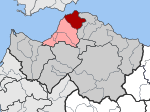
25ης Μαρτίου, Municipality of Patras Κάτω Καστρίτσι (Municipal Unit of Rio)

Geographical coordinates (GPS) Address Website External links Nearby Places
placeShow on map

Wikipedia: University of PatrasContinue reading on Wikipedia

Geographical coordinates (GPS)

Latitude Longitude
N 38.286666666667 ° E 21.786388888889 °
placeShow on map

Address

Πανεπιστημιούπολη Πατρών

25ης Μαρτίου
265 04 Municipality of Patras, Κάτω Καστρίτσι (Municipal Unit of Rio)
Peloponnese, Western Greece and the Ionian, Greece
mapOpen on Google Maps

Website
upatras.gr

linkVisit website

linkWikiData (Q1462246)
linkOpenStreetMap (151563341)

Up 2017 logo en
Up 2017 logo en
Share experience

Nearby Places

Rio Castle
Rio Castle

The Rio Castle (Greek: κάστρο του Ρίου), historically known as the Castle of the Morea (Italian: Castello de Morea) in opposition to its counterpart, the Castle of Rumelia at Antirrio, is located at the north tip of the Rio peninsula in Achaea, Greece, at the entrance of the Corinthian Gulf. The Rio-Antirio Bridge is located next to it, and the local ferry docks lie on either side. Today it is used for cultural purposes, especially concerts and is a tourist attraction. The castle was built by the Ottoman Sultan Bayezid II in 1499 above the ruins of an ancient temple of Poseidon, within three months. Along with its twin, the Antirrio Castle, they were intended to protect the entrance to the Corinthian Gulf, and were nicknamed the "Little Dardanelles". The castle is located on the sea shore, with its northern side protected by the sea and the southern by a broad moat, filled with sea water, and two outer bastions (ravelins), linked to the main fort by stone bridges. It has two gates, the central one, facing landwards, and the sea gate. In 1533, it was briefly captured by the Genoese under Andrea Doria, but the Ottomans recaptured it later in the year. In 1687, during the Morean War, it was taken by the Venetians under Francesco Morosini. The Venetians rebuilt the castle, restoring and strengthening it by the addition of towers, giving it its final shape. The Venetians also added the small chapel of the Life-giving Spring (Zoodochos Pege). The Ottomans retook it in 1715, and remained until they surrendered it to French General Nicolas Joseph Maison. Between 1831 and 1912, the castle was used as a military and then civilian prison, whose inmates were often used by the municipality of Patras for cleaning the streets of Rio.