place

Achanakal

Nilgiris district geography stubsUse Indian English from September 2017Villages in Nilgiris district
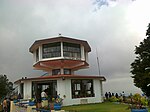
Entrance of Achanakal

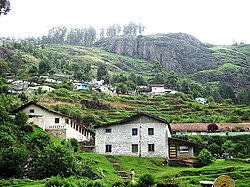
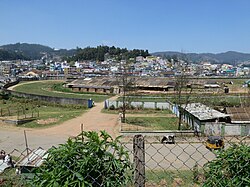
Achanakal is a Badaga village in the Nilgiris district in the Indian state of Tamil Nadu. The village is located adjacent to the Coonoor-Ooty highway in the Ketti valley. The name is believed to be derived from asinikol meaning bamboo sticks in Badaga language which formed the place before the village came into existence. Ketti valley is also considered the second steepest valley in the world. Achanakal is the largest village among the other 13 villages which are located in the valley. The village is just 3 Kilometres away from Ketti and the Lovedale railway stations.

Excerpt from the Wikipedia article Achanakal (License: CC BY-SA 3.0, Authors, Images).

Geographical coordinates (GPS)

Latitude Longitude
N 11.381388888889 ° E 76.721944444444 °
placeShow on map

Address


643215
Tamil Nadu, India
mapOpen on Google Maps

Entrance of Achanakal
Share experience

Nearby Places

Nilgiris district
Nilgiris district

The Nīlgiris district is one of the 38 districts in the southern Indian state of Tamil Nadu. Nilgiri (English: Blue Mountains) is the name given to a range of mountains spread across the borders among the states of Tamil Nadu, Karnataka and Kerala. The Nilgiri Hills are part of a larger mountain chain known as the Western Ghats. Their highest point is the mountain of Doddabetta, height 2,637 m. The district is contained mainly within the Nilgiri Mountains range. The administrative headquarters is located at Ooty (Ootacamund or Udhagamandalam). The district is bounded by Coimbatore to the south, Erode to the east, and Chamarajnagar district of Karnataka and Wayanad district of Kerala to the north. As it is located at the junction of three states, namely, Tamil Nadu, Kerala, and Karnataka, significant Malayali and Kannadiga populations reside in the district. Nilgiris district is known for natural mines of Gold, which is also seen in the other parts of Nilgiri Biosphere Reserve extended in the neighbouring states of Karnataka and Kerala too. Nilgiris district ranked first in a comprehensive Economic Environment index ranking districts in Tamil Nadu (except Chennai district) prepared by the Institute for Financial Management and Research in August 2009. Tea and coffee plantations have been important to its economy. As of 2011, the Nilgiris district had a population of 735,394, with a sex-ratio of 1,042 females for every 1,000 males. All types of single use plastics are banned in Nilgiris district: it is the first plastic free district in Tamil Nadu.