place

Industriales station

1995 establishments in ColombiaColombia stubsMedellín Metro stationsPages with no open date in Infobox stationRailway stations opened in 1995

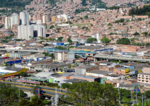
Industriales is the 14th station on the Medellín Metro from north to south, and the sixth on line A going south. It is one of the three transfer stations to line 1 of the metro bus system known as Metroplus. The station was opened on 30 November 1995 as part of the inaugural section of Line A, from Niquía to Poblado.The station is located in the south-central part of Medellín, adjacent to the headquarters of Bancolombia, the Bridge of Argos and Nutibara hill. The station is located along the Medellin River and 30th Avenue, a road that crosses the city from east to west and connects the neighborhoods of El Poblado in Belén, being closest to the Sports Unit Belén station (although it is far from this) and adjacent to the South Highway that leads to southwest Colombia.

Excerpt from the Wikipedia article Industriales station (License: CC BY-SA 3.0, Authors).

Industriales station
Carrera 62, Medellín Comuna 14 - El Poblado (Perímetro Urbano Medellín)

Geographical coordinates (GPS) Address Nearby Places
placeShow on map

Wikipedia: Industriales stationContinue reading on Wikipedia

Geographical coordinates (GPS)

Latitude Longitude
N 6.23 ° E -75.575555555556 °
placeShow on map

Address

Industriales

Carrera 62
050021 Medellín, Comuna 14 - El Poblado (Perímetro Urbano Medellín)
Antioquia, Colombia
mapOpen on Google Maps

Share experience

Nearby Places

Integrated urban water management in Medellín

Integrated urban water management in Medellín, Colombia is considered to be an overall success and a good example of how a large metropolitan area with moderate income disparity can adequately operate and maintain quality water supply to its many citizens. This is quite remarkable given the large urbanized population in the metropolitan area of the Aburrá Valley of 3.3 million, many of whom live on the slopes of the Aburrá Valley where Medellín is situated and highly prone to landslides and stormwater erosion. Sound urban water management within the metropolitan area of the Aburrá Valley is carried out by a set of technically strong institutions with financial independence—and lack of political interference such as Empresas Publicas de Medellin (EPM).The metropolitan area of the Aburrá Valley is located near the equator but with a high elevation, the average climate is quite mild without great variation in temperature and rainfall. Consistent and adequate precipitation in the surrounding basins usually ensures that nearby water basins feeding the Aburrá Medellín River basin and subsequently the MAM can store approximately 178 BCM of water for the Metropolitan Area of the Aburrá Valley. Adequate supply and good resource management has allowed nearly 100% of MAM citizens across ten municipalities to receive piped water. Substantial challenges remain however for Colombia's second largest urban and economical center in dealing with an increasing urbanization rate and the settling of inhabitants higher up the hillsides within the narrow valley. Drainage of stormwater is probably the most significant concern for the Metropolitan Area of the Aburrá Valley government and managing institutions. A stormwater management plan has been instituted to help address the adverse effects of urbanization, lack of infrastructures in poorer neighborhoods able to handle stormwater, river conservation and risk assessment.