place

Nojpetén

15th-century establishments in the Maya civilization17th century in the Maya civilizationCapitals of former nationsHarv and Sfn no-target errorsHistory of Petén
Interlanguage link template existing linkItzaMaya sitesPopulated places established in the 1440s
Flores, Petén, aerial view from above Santa Elena

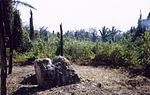
Nojpetén (also spelled Noh Petén, and also known as Tayasal) was the capital city of the Itza Maya kingdom of Petén Itzá. It was located on an island in Lake Petén Itzá in the modern department of Petén in northern Guatemala. The island is now occupied by the modern town of Flores, the capital of the Petén department, and has had uninterrupted occupation since pre-Columbian times. Nojpetén had defensive walls built upon the low ground of the island, which may have been hastily constructed by the Itza at a time when they felt threatened either by the encroaching Spanish or by other Maya groups.

Excerpt from the Wikipedia article Nojpetén (License: CC BY-SA 3.0, Authors, Images).

Nojpetén
Calle Central Doctor Julio Penados del Barrio, Flores

Geographical coordinates (GPS) Address Phone number Website Nearby Places
placeShow on map

Wikipedia: NojpeténContinue reading on Wikipedia

Geographical coordinates (GPS)

Latitude Longitude
N 16.929722222222 ° E -89.891666666667 °
placeShow on map

Address

Bistró Puertas del Cielo

Calle Central Doctor Julio Penados del Barrio 07
01701 Flores
Petén, Guatemala
mapOpen on Google Maps

Phone number

call78424216

Website
puertasdlcielo.com

linkVisit website

Flores, Petén, aerial view from above Santa Elena
Share experience

Nearby Places

Motul de San José
Motul de San José

Motul de San José is an ancient Maya site (known anciently as Ik'a', 'Windy Water') located just north of Lake Petén Itzá in the Petén Basin region of the southern Maya lowlands. It is a few kilometres from the modern village of San José, in Guatemala's northern department of Petén. A medium-sized civic-ceremonial centre, it was an important political and economic centre during the Late Classic period (AD 650–950). The site was first settled between 600 and 300 BC, in the latter portion of the Middle Preclassic period, when it most likely was a fairly small site. This Maya city then had a long and continuous occupational history until the Early Postclassic, up to around AD 1250, with peaks in the Late Preclassic and Late Classic periods. Motul de San José had begun to refer to Tikal as its overlord in the late 4th century AD; by the 7th century it had switched its allegiance to Calakmul, Tikal's great rival, before returning its allegiance to Tikal in the early 8th century. In the late 8th century Motul de San José appears to have been conquered by Dos Pilas, capital of the Petexbatún kingdom. Most natural resources were easily available in the immediate vicinity of the city. The nearby port at La Trinidad de Nosotros was an important hub for the import of exotic goods and export of local products such as chert and ceramics. Other goods not immediately available were likely to have been provided by the city's satellite sites. The local area provided a number of different soils suitable for varied agricultural use, and the port at La Trinidad de Nosotros provided the city with freshwater products such as turtles, crocodiles and freshwater molluscs. Deer were hunted locally and provided an important source of protein for the upper class, while freshwater snails were the main source of protein for commoners. Motul de San José has been identified as the source of Ik-style polychrome ceramics bearing painted scenes of the Late Classic Maya aristocracy involved in a variety of courtly activities. The Ik-style was characterised by hieroglyphs painted in a pink or pale red colour, scenes with dancers wearing masks, and the realistic representation of subjects as they appeared in life. The city was the capital of a polity that included various satellite sites of varying importance, including a port on the shore of Lake Petén Itzá.