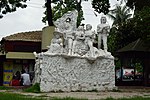
The International Crimes Tribunal (Bangladesh), abbreviated as, ICT (Bangladesh), is a domestic war crimes tribunal in Bangladesh set up in 2009 to investigate and prosecute suspects for the genocide committed in 1971 by the Pakistan Army and their local collaborators Razakars, Al-Badr and Al-Shams during the Bangladesh Liberation War. During the 2008 general election, the Awami League (AL) pledged to try war criminals. The government set up the tribunal after the Awami League won the general election in December 2008 with a more than two-thirds majority in parliament.
The War Crimes Fact Finding Committee, tasked to investigate and find evidence, completed its report in 2008, identifying 1,600 suspects. Prior to the formation of the ICT, the United Nations Development Programme offered assistance in 2009 on the tribunal's formation. In 2009, the parliament amended the 1973 act that authorised such a tribunal to update it. The first indictments were issued in 2010. However, the main perpetrators of the war crimes, the Pakistan soldiers, remained out of the reach of the courts.
By 2012, nine leaders of Jamaat-e-Islami, the largest Islamist party in the nation, and two of the Bangladesh Nationalist Party, had been indicted as suspects in war crimes. Three leaders of Jamaat were the first tried; each were convicted of several charges of war crimes. The first person convicted was Abul Kalam Azad, tried in absentia as he had left the country; he was sentenced to death in January 2013.
The ICT initially received some offers of international assistance. In 2009, the UN offered its expertise, expressing an interest in helping Bangladesh avoid the problems other countries faced in similar trials. The EU has passed three resolutions supporting the trials and Jean Lambert has said "she expected that the trial would conform to the highest standard possible."
However, since the beginning of the trials several human rights organisations and international legal figures have raised objections to the court proceedings. Human Rights Watch, which initially supported the establishment of the tribunal, have criticised it for issues of fairness and transparency, as well as reported harassment of lawyers and witnesses representing the accused. Bianca Karim and Tirza Theunissen have written that the international community have voiced concerns that the trial will not be transparent or impartial.
Jamaat-e-Islami supporters and their student wing, Bangladesh Islami Chhatra Shibir, called a general strike nationwide on 4 December 2012, which erupted in violence. The group demanded the tribunal be scrapped permanently and their leaders be released immediately.
Annual public opinion polls regularly rank the war-crimes trials ranked among the top three "positive steps that the government has taken", though the issue is not considered among the top ten most pressing issues facing the country. Polling in 2013 by AC Nielsen found that more than two-thirds of Bangladeshis characterise the ICT as "unfair" or "very unfair", though 86% support its implementation.
In February 2013, Abdul Quader Molla, Assistant Secretary General of Jamaat, was the first person sentenced to death by the ICT who was not convicted in absentia. Initially, Molla was sentenced to life imprisonment, but demonstrations, including the 2013 Shahbag protests in Dhaka, led to a new punishment.
 Continue reading on Wikipedia