place

Sultana (steamboat)

1863 ships1865 disasters in the United StatesCrittenden County, ArkansasDisasters in TennesseeExplosions in 1865
Explosions in the United StatesHistory of CincinnatiMaritime boiler explosionsMaritime incidents in April 1865Ohio in the American Civil WarPaddle steamersShelby County, TennesseeShip firesShipwrecks of the American Civil WarShipwrecks of the Mississippi RiverSteamshipsTennessee in the American Civil WarVague or ambiguous time from December 2023
Ill fated Sultana, Helena, Arkansas, April 27, 1865

Sultana was a commercial side-wheel steamboat which exploded and sank on the Mississippi River on April 27, 1865, killing 1,167 people in what remains the worst maritime disaster in United States history. Constructed of wood in 1863 by the John Litherbury Boatyard in Cincinnati, Ohio, Sultana was intended for the lower Mississippi cotton trade. The steamer registered 1,719 tons and normally carried a crew of 85. For two years, she ran a regular route between St. Louis and New Orleans and was frequently commissioned to carry troops during the American Civil War. Although designed with a capacity of only 376 passengers, she was carrying 2,128 when three of the boat's four boilers exploded and caused it to sink near Memphis, Tennessee. The disaster was overshadowed in the press by events surrounding the end of the Civil War, including the killing of President Abraham Lincoln's assassin John Wilkes Booth just the day before. No one was ever held accountable for the tragedy.

Excerpt from the Wikipedia article Sultana (steamboat) (License: CC BY-SA 3.0, Authors, Images).

Geographical coordinates (GPS)

Latitude Longitude
N 35.190555555556 ° E -90.114444444444 °
placeShow on map

Address

Shelby County


Tennessee, United States
mapOpen on Google Maps

Ill fated Sultana, Helena, Arkansas, April 27, 1865
Share experience

Nearby Places

Wolf River (Tennessee)

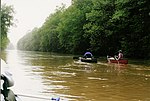
The Wolf River is a 105-mile-long (169 km) alluvial river in western Tennessee and northern Mississippi, whose confluence with the Mississippi River was the site of various Chickasaw, French, Spanish and American communities that eventually became Memphis, Tennessee. It is estimated to be about 12,000 years old, formed by Midwestern glacier runoff carving into the region's soft alluvial soil. It should not be confused with The Wolf River (Middle Tennessee) which flows primarily in Middle Tennessee and southern Kentucky. The Wolf River rises in the Holly Springs National Forest at Baker's Pond in Benton County, Mississippi, and flows northwest into Tennessee, before entering the Mississippi River north of downtown Memphis. In 1985, the Wolf River Conservancy was formed in opposition to plans for additional channel dredging. In 1995 the "Ghost River" section of the Wolf was saved from timber auction by a coordinated effort of the Tennessee Wildlife Resources Agency, the Tennessee Department of Environment and Conservation, local conservation activists, and the Wolf River Conservancy. In 1997 the river was designated an American Heritage River by presidential proclamation under a special United States Environmental Protection Agency program. In that same year, musician Jeff Buckley accidentally drowned in the Wolf River while swimming in Memphis. In 2005 the Wolf River Restoration Project was commenced to stop rapid erosion at Collierville, Tennessee. The river serves to mitigate flooding and erosion, as habitat for wildlife, as a recreational area, as well as supplying clean water to an underground aquifer.