place

Busan American Cultural Service building arson

1980s fires in Asia1982 crimes in South Korea1982 disasters in South Korea1982 fires1982 in South Korea
Anti-American sentiment in South KoreaArson in South KoreaHistory of BusanKorean history stubsLeft-wing nationalism in South KoreaPolitical history of South KoreaSouth Korea–United States relations

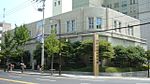
The 1982 Busan arson attack or Busan American Council Fire Accidents (Hangeul: 부산 미국문화원 방화사건, Hanja: 釜山美國文化院放火事件) was an anti-American attack against the United States Information Service building in Busan on 18 March 1982. The attack resulted in the death of a Dong-a University student who was studying in the building; three others were injured.

Excerpt from the Wikipedia article Busan American Cultural Service building arson (License: CC BY-SA 3.0, Authors).

Busan American Cultural Service building arson
Gwangbokjungang-ro, Busan Daecheong-dong

Geographical coordinates (GPS) Address Nearby Places
placeShow on map

Wikipedia: Busan American Cultural Service building arsonContinue reading on Wikipedia

Geographical coordinates (GPS)

Latitude Longitude
N 35.102689 ° E 129.031176 °
placeShow on map

Address

Busan Modern History Museum

Gwangbokjungang-ro
48948 Busan, Daecheong-dong
South Korea
mapOpen on Google Maps

Share experience

Nearby Places

Gukje Market
Gukje Market

Gukje Market (Korean: 국제시장) or Nampodong International Market is a market in Sinchang-dong, Jung District, Busan, South Korea. It was originally known by the name Dottaegi Market, and later as Jayu Market. The market was founded in 1945 under the name Dotegi Market in an empty lot. It sold goods left behind by the Japanese during their departure from Korea after the Japanese Colonial Period ended. Items procured from foreign trade and with U.S Military members were also sold. This catapulted the rise of the markets business. In 1948 the name of the market changed to a free market and later to an international market in 1950. During the 1950–1953 Korean War, the market became a hotspot for commerce and culture, as people from all over the Korean peninsula sought refuge in the Busan area. Today Gukje Market spans 6 zones, 12 buildings, 24 spaces and countless vendors. The market now sells a diverse array of goods, particularly machinery tools, kitchenware, and clothing. Newer storefronts, restaurants, and attractions have been added in recent years. It is accessible from the Jagalchi and Nampo subway stations. It is within walking distance to two other markets, Bupyeong Market and Jagalchi Market.The market was famously depicted in the 2014 film of the same Korean name (English title Ode to My Father). The film is currently the fourth highest-grossing film in the history of South Korean cinema, with 14.2 million tickets sold.