place

Lauderdale Oval

Australian sports venue stubsSports venues in Tasmania
Lauderdale Oval
Lauderdale Oval

Lauderdale Oval or Lauderdale Sports Ground is a suburban Australian rules football and cricket ground situated in the beach-side Hobart suburb of Lauderdale, Tasmania, Australia. It is home of the Lauderdale Football Club in the Tasmanian State League and has been used by the Lauderdale Football Club since 1948 in both amateur and country football. In 1998, Lauderdale Oval underwent upgrades for increased lighting, enabling the ground to be used for night football in the Southern Football League.

Excerpt from the Wikipedia article Lauderdale Oval (License: CC BY-SA 3.0, Authors, Images).

Lauderdale Oval
Bayview Road, Hobart Lauderdale

Geographical coordinates (GPS) Address External links Nearby Places
placeShow on map

Wikipedia: Lauderdale OvalContinue reading on Wikipedia

Geographical coordinates (GPS)

Latitude Longitude
N -42.915 ° E 147.48833333333 °
placeShow on map

Address

Lauderdale Oval

Bayview Road
7021 Hobart, Lauderdale
Tasmania, Australia
mapOpen on Google Maps

linkWikiData (Q6497871)
linkOpenStreetMap (96319106)

Lauderdale Oval
Lauderdale Oval
Share experience

Nearby Places

Lauderdale, Tasmania

Lauderdale is a town on the outskirts of Hobart, capital of Tasmania, Australia. The population of Lauderdale is approximately 2,592 (2021 census). It is in the local government area of City of Clarence. The town is situated on the eastern side of a thin isthmus that connects the South Arm Peninsula to the mainland. It faces Ralphs Bay, and the majority of Lauderdale's population live along Roches Beach, which faces Frederick Henry Bay. Along with nearby Seven Mile Beach, it is a popular residential area for people working in the Hobart CBD. Lauderdale/Roches Beach is overlooked by Single Hill, which is just to the North. Beyond Single Hill is the town of Seven Mile Beach. The view from Single Hill gives a clear view of the town of Lauderdale. The view also shows the nearby ABC radio transmitter mast. The Ralphs Bay side of Lauderdale reveals a sharp gradient in the bay where the water changes colour. This change can be especially noticeable when driving along the main road from Hobart. Walker Corporation had plans to build a large residential 'canal estate' in Ralphs Bay in front of Lauderdale. There were many protests against the development on ecological grounds; the development would be over sensitive mud flats and affect the habitat of migratory birds and the endangered spotted handfish. Former State Premier Paul Lennon was very much in favour of the development whilst acting as premier. He has close relations with Walker Corp. In June 2010, Ralphs Bay was saved when the Tasmanian Planning Commission rejected the proposed 'Lauderdale Quay' canal housing development. However the Legislative Council of the Tasmanian Parliament debated the Canal Estates (Prohibition) Bill 2011 on 7 July 2012 and voted against this legislation. So while the Ralphs Bay development will not go ahead the way is still open to other developments.

1946 Australian National Airways DC-3 crash

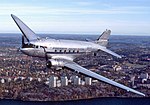
On Sunday 10 March 1946 a Douglas DC-3 aircraft departed from Hobart, Tasmania for a flight to Melbourne. The aircraft crashed into the sea with both engines operating less than 2 minutes after takeoff. All twenty-five people on board the aircraft died. It was Australia's worst civil aviation accident at the time.An investigation panel was promptly established to investigate the accident. The panel was unable to conclusively establish the cause but it decided the most likely cause was that the automatic pilot was inadvertently engaged shortly after takeoff while the gyroscope was caged. The Department of Civil Aviation took action to ensure that operation of the automatic pilot on-off control on Douglas DC-3 aircraft was made distinctive from operation of any other control in the cockpit, and that instructions were issued impressing on pilots that gyroscopes should be un-caged prior to takeoff. An inquiry chaired by a Supreme Court judge closely examined three different theories but found there was insufficient evidence to determine any one of them as the cause. This inquiry discovered that the captain of the aircraft was diabetic and had kept it secret from both his employer and the Department of Civil Aviation. The judge considered the captain's diabetes and self-administration of insulin probably contributed significantly to the accident but he stopped short of making this his official conclusion. In his report, the judge recommended modification of the lever actuating the automatic pilot. The inquiry uncovered four irregularities in the regulation of civil aviation in Australia and the judge made four recommendations to deal with these irregularities.