place

National Pedagogic University (Colombia)

National Pedagogic University (Colombia)
Universidad Pedagógica Nacional (Colombia) logo

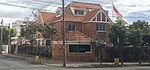
The National Pedagogic University (Spanish: Universidad Pedagógica Nacional) located in Bogotá, capital of Colombia, is a university under the Ministry of National Education of Colombia. It began academic works as a female education institution; in 1962 it acquired its national and joint character. It offers 20 undergraduate academic programs and 19 graduate, within which is the only doctorate in education offered in the country, in agreement with the Universidad del Valle and Universidad Distrital Francisco José de Caldas. The National Pedagogic University has the principal goal of integral teacher training through a coherent educational plan based on the principles underlying its nature and rationale. teach excellence, quality, equity, membership and academic rigor of the training programs and processes in teaching, research and extension. That is because of its slogan "Educating Educators". The university has received the high quality institutional accreditation by the Ministry of Education in 2016.

Excerpt from the Wikipedia article National Pedagogic University (Colombia) (License: CC BY-SA 3.0, Authors, Images).

National Pedagogic University (Colombia)
Calle 73, Bogota Localidad Chapinero

Geographical coordinates (GPS) Address External links Nearby Places
placeShow on map

Wikipedia: National Pedagogic University (Colombia)Continue reading on Wikipedia

Geographical coordinates (GPS)

Latitude Longitude
N 4.65814 ° E -74.0588 °
placeShow on map

Address

Universidad Pedagógica Nacional

Calle 73
110221 Bogota, Localidad Chapinero
Colombia
mapOpen on Google Maps

linkWikiData (Q2495711)
linkOpenStreetMap (161581334)

Universidad Pedagógica Nacional (Colombia) logo
Share experience

Nearby Places

2003 El Nogal Club bombing

The 2003 El Nogal Club bombing was a terrorist attack that occurred in Bogotá, Colombia. On 7 February 2003, a car containing 200 kg of explosives that was parked in a garage on the third floor of the multi-story El Nogal club, an elite, high-class social and business club, exploded, killing 36 people and wounding more than 200. There were approximately 600 people in the building at the time of the explosion. The attack was the worst in Colombia for more than a decade.No group publicly claimed responsibility for the bombing. The United Nations adopted Security Council Resolution 1465 on 13 February 2003 condemning the attack. Colombian Vice President Francisco Santos Calderón blamed the guerrilla group FARC, saying that there was "not the slightest doubt" that they were responsible and that the government had enough evidence of its involvement. Colombian authorities and investigators, with the aid of ATF members from the U.S., inspected the scene and the remains of the car bomb. Colombian prosecutors linked FARC to the bombing through the participation of, among others, John Freddy Arellan, a squash instructor who died in the bombing. According to the government, Arellan had recently acquired membership in the club and drove the car containing the explosives, a vehicle which had been bought in late 2002 using false documents, into the parking area. The government claimed Arrellan would have been employed by FARC's "Javier Paz", not knowing that the bomb would be detonated with him and his uncle still inside the club.On 10 March 2003, FARC denied any responsibility in the attack and described it as "state terrorism", claiming that the government of Colombia planted the bomb in order to unite the country against them.In March 2008, Colombian authorities released documents said to be found in a computer belonging to the slain FARC commander "Raúl Reyes", including a 13 February 2003 message in which "Reyes" called the attack a "formidable act" and mentioned the "political convenience of denying responsibilities".

Colegio Jordán de Sajonia

Colegio Jordán de Sajonia (English: Jordan of Saxony School; Latin: Schola Jordanus de Saxonia), is a private Catholic elementary, secondary and preparatory school located in Bogotá, D.C., Colombia. The bilingual school was founded on February 1, 1954 by Alberto E. Ariza, a Dominican Friar. La historia y actividad educativa del Colegio Jordán de Sajonia se remonta a comienzos del siglo pasado, cuando los frailes dominicos lograron restaurar varias de sus casas, conventos, parroquias e instituciones educativas, tras la clausura realizada por el gobierno de Tomás Cipriano de Mosquera y organizar nuevamente la Provincia de Colombia, junto a la Virgen de Chiquinquirá y al santuario. Allí se funda un centro de estudios denominado “Escuela Apostólica San Vicente Ferrer”, el cual en 1947 fue trasladado a Villa de Leyva, para regresar nuevamente a Chiquinquirá. El seminario fue inaugurado el 2 de febrero de 1954, albergando en su momento a 98 seminaristas, con el carácter de internado y centrado en su formación apostólica, bajo la rectoría de Fr. José de Jesús Sedano, O.P. En el año 1968 empiezan a recibir estudiantes externos, cambiando parte del plan de estudios, dejando asignaturas de la formación de los seminaristas solamente para ellos y dando apertura a la formación académica propia de la educación primaria y media. Han sido casi setenta años de historia, en los cuales los Dominicos han formado niños, niñas y jóvenes desde un proyecto basado en la formación integral y el pensamiento crítico. Setenta años en los cuales el colegio ha tenido transformaciones que van a la vanguardia de los procesos educativos y tecnológicos. Los cambios en términos de la infraestructura inicial han sido bastantes, la mayoría de estos centrados en la necesidad de adecuación y construcción de nuevos espacios para el desarrollo de las actividades académicas y lúdicas de los estudiantes, así como de las zonas comunes como restaurante y cafetería, teniendo en cuenta además que el número de estudiantes aumenta con frecuencia, lo que permite proyectar la construcción de un nuevo edificio para albergar a los niños y niñas de preescolar. ver más