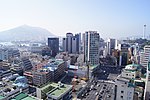
Busan station (Korean: 부산역) is a train station in Busan, South Korea. It is the southern terminus of the Gyeongbu Line & the Gyeongbu high-speed railway, the most important railway lines in the country, which links Busan with Seoul in around two and a half hours on KTX, Korea's high-speed rail train. There are also cheaper, slower rail alternatives to seoul, including the "Mugungwha" Train, which takes over four hours. Essentially all trains to Seoul stop in a few settlements between the two cities. It is also an underground station on Busan Metro Line 1 between Jungang and Choryang stations. The station is centrally located in the Choryang-dong (neighbourhood) of Dong-gu (ward) in Busan.
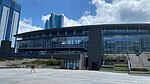
Construction of the new KTX Busan terminal began in 2001 and was completed in 2003. The new station covers 24,646 square meters (265,290 square feet) and it is equipped with up-to-date automatic ticket vending machines, 11 elevators, 10 escalators, PC area, waiting and vending areas. Western shop franchises in the station include a Tom&Tom's, a "Subway" sandwich shop, and a Weeny beenys.
The entire convex curved front of the structure is glass covered construction and the station is considered an architecturally significant building.The main entrance opens up to a large park-like area surrounding the front of the station to the west.
 Continue reading on Wikipedia