place

Hilton College (South Africa)

1872 establishments in the Colony of NatalBoarding schools in South AfricaBoys' schools in South AfricaEducational institutions established in 1872Member schools of the Headmasters' and Headmistresses' Conference
Nondenominational Christian schools in South AfricaPrivate schools in KwaZulu-NatalUmgungundlovu District MunicipalityUse South African English from July 2014
William Cambell Building

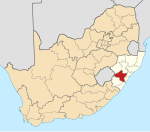
Hilton College, more commonly referred to as Hilton, is a South African private boarding school for boys located near the town of Hilton in the KwaZulu-Natal Midlands and is situated on a 1,762 ha (4,350 acre) estate that includes a 550 ha (1,400 acre) wildlife reserve and the 150 ha (370 acre) school campus Hilton College was founded in 1872 by Gould Arthur Lucas and Reverend William Orde Newnham as a non-denominational Christian boys' school. It follows English public school tradition and is a full boarding school, which means all pupils live at the school, and is one of only two such remaining single-sex boys' schools (the other being Michaelhouse) to continue this practice in South Africa. Hilton's 500 pupils each have access to a personal tutor and have a bespoke academic plan. It has maintained its position as the most expensive school in South Africa.

Excerpt from the Wikipedia article Hilton College (South Africa) (License: CC BY-SA 3.0, Authors, Images).

Hilton College (South Africa)
D534, uMgeni Local Municipality uMngeni Ward 6

Geographical coordinates (GPS) Address Nearby Places
placeShow on map

Wikipedia: Hilton College (South Africa)Continue reading on Wikipedia

Geographical coordinates (GPS)

Latitude Longitude
N -29.49206 ° E 30.30109 °
placeShow on map

Address

Hilton College Estate

D534
3245 uMgeni Local Municipality, uMngeni Ward 6
KwaZulu-Natal, South Africa
mapOpen on Google Maps

William Cambell Building
Share experience

Nearby Places

Cedara College of Agriculture

Cedara College of Agriculture is an agricultural college and research station near Howick, KwaZulu-Natal, South Africa, founded partly by Thomas Robertson Sim. The foundation stone of the "School of Agriculture and Forestry" was laid on 28 April 1905. The original prospectus advertised lectures in Forestry, Horticulture, Dairying, Veterinary Science, Chemistry, Elementary Mathematics, Bookkeeping, Farm Surveying, Zoology, and Fish Husbandry. Currently (2019), Cedara College (Agricultural Training Institute) offers a three-year National Diploma in Agricultural Management where students are able to specialize in either Animal Production or Crop Production. It provides vocational training in cultivated pastures, dairying, beef, small stock, poultry, pigs and fodder crops, agronomy, game, vegetables, and fruit production. In a joint venture, the College also hosts the BAgric (Agricultural Extension & Rural Resource Management) programme offered by UKZN. Cedara college also offer short courses through the Agricultural Skills Development unit(ASD). This unit offers vocational education and training programs to facilitate the linkage between structured learning and work experience in order to obtain registered qualification. currently(2021) ASD offers: Goat production skills program Broiler production skills program Layer production skills program Pig production skills program Beef production skills program Advanced animal production skills program Vegetable production skills program Plant production skills programA 60-ha area commonly known as "College Farm" has been set aside primarily for training students in animal husbandry and general farming practices. A beef herd and a sheep flock are kept specifically to train students in aspects of basic veterinary techniques, beef management practices (dehorning, castration, identification) and sheep management practices (foot care, castration, tail docking, identification). A small pig unit and small dairy are also kept for student training purposes. A broiler and layer unit meet the demands of poultry production practicals. A fully equipped laboratory is used for crop- and animal-related teaching and learning.