place

Eastern Institute of Technology

1975 establishments in New Zealand2020 disestablishments in New ZealandEducation in the Hawke's Bay RegionNapier, New ZealandTe Pūkenga – New Zealand Institute of Skills and Technology
Universities and colleges in New Zealand

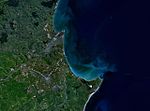
The Eastern Institute of Technology (EIT) is a government owned tertiary education institution with three campuses: Hawke’s Bay, Auckland, and Gisborne, New Zealand. It is also referred to as EIT Hawke's Bay, EIT Tairāwhiti, and EIT Auckland. EIT serves as the main regional higher education centre for the Hawke's Bay and Gisborne regions. It has two faculties. The Faculty of Educations, Humanities, and Health Science includes Te Ūranga Waka – Te Whatukura, Toihoukura, Education and Social Sciences, Health and Sport Science and Nursing schools, and an Ideaschool. The Faculty of Commerce and Technology includes Tourism and Hospitality, English Language Centre, Trades and Technology, Business, Computing and Applied Science schools.The Eastern Institute of Technology has a 28-hectare (69-acre) main campus in Taradale, a suburb in Napier. It is situated between the twin cities of Napier and Hastings, (approximately 9 km (5.6 mi) from Napier, and 11 km from Hastings), which together comprise the fifth largest urban area in New Zealand. There are also additional campuses in Tairāwhiti and Auckland on Queen Street. EIT also has learning centres in Hastings, Waipukurau, Ruatoria, Tokomaru Bay, Wairoa and a centre in Maraenui, a suburb of the city of Napier.

Excerpt from the Wikipedia article Eastern Institute of Technology (License: CC BY-SA 3.0, Authors).

Eastern Institute of Technology
Gloucester Street, Napier

Geographical coordinates (GPS) Address External links Nearby Places
placeShow on map

Wikipedia: Eastern Institute of TechnologyContinue reading on Wikipedia

Geographical coordinates (GPS)

Latitude Longitude
N -39.5468 ° E 176.8385 °
placeShow on map

Address

Eastern Institute of Technology (EIT)

Gloucester Street
4142 Napier
Hawke's Bay, New Zealand
mapOpen on Google Maps

linkWikiData (Q5330219)
linkOpenStreetMap (145680087)

Share experience

Nearby Places

Napier-Hastings Urban Area

The Napier-Hastings Urban Area was defined by Statistics New Zealand (Stats NZ) as a main urban area of New Zealand that was based around the twin cities of Napier and Hastings in the Hawke's Bay Region. It was defined under the New Zealand Standard Areas Classification 1992 (NZSAC92), which has since been superseded by the Statistical Standard for Geographic Areas 2018 (SSGA18). The urban area lay mostly on the Heretaunga Plains, with part on surrounding hills. It was a city cluster consisting of the cities of Napier and Hastings, the town of Havelock North and some smaller settlements. It was the sixth-most-populous urban area in the country under the NZSAC92, with 134,500 residents, fewer than Tauranga (141,600) and more than Dunedin (122,000). While the two cities are separated by 9 km (5.6 mi) of rural land from city edge to edge (20 km from one city centre to the next), there is sufficient economic and social integration between the cities that Stats NZ treated them as a single urban area. Stats NZ also subdivided the urban area into urban zones, as they did for the urban areas of Auckland, Hamilton and Wellington. The Napier-Hastings Urban Area contains about three-quarters of the population of the entire Hawke's Bay. Under SSGA18, Stats NZ split up the Napier-Hastings Urban Area for statistical purposes. It was split into two "large urban areas" (30,000 to 99,999 population) of Napier and Hastings, the "medium urban area" (10,000 to 29,999) of Havelock North, the "small urban area" (1,000 to 9,999) of Clive, and the "rural settlements" (300 to 999) of Haumoana, Te Awanga, Whakatu and Whirinaki. Some settlements of less than 300 that were included in the Napier-Hastings Urban Area were left out entirely, including Eskdale, Omahu, Pakipaki, Pakowhai and Waiohiki. Stats NZ similarly split Wellington into Lower Hutt, Porirua, Upper Hutt and the urban part of Wellington City under SSGA18.

Tamatea High School

Tamatea High School is a state secondary co-educational school located in Napier, New Zealand. The school was opened in 1975. Robin Fabish has been the principal since 2015. He was previously Deputy Principal at Te Aute College and Head of Māori at Napier Boys' High School. Since Matua Robin started the school roll has consolidated and is currently 310 boys and girls. The school has a reputation for being a whānau (family) community. Being smaller than others in the city means that individual student needs can be catered for and there is less chance of anyone falling through the cracks. The classes are typically around 20-25 students and smaller in the senior school. The school population is 55% Māori, 38% Pākehā with the rest of the students being Pasifika and Asian. Tamatea High School is committed to giving effect to Te Tiriti o Waitangi. This means that the school is working to ensure that mātauranga Māori (Māori knowledge) has parity with Western knowledge. The curriculum has a strong focus on te reo Māori (Māori language), tikanga Māori (Māori culture), local Māori histories, waiata and haka. Building a strong cultural identity is important for all students but especially Māori and Pasifika students is a foundation for academic success. The school sees this as an essential element of being a good treaty partner. The teaching fraternity at Tamatea High school is very close. The collegiality is a real positive for teachers in the school. They focus on building strong relationships with their students and often go the extra distance to support student success. Students have a strong voice in the school which means they influence everything from the learning programmes to uniform changes to property programmes. The whānau of students are included in the goal setting process and tracking of progress. Three times a year whānau are invited to half hour conferences with our Whānau Group Teachers. In these conferences students lead the conversation about their learning progress and next steps. Regular communication with families is encouraged. The school has three overarching goals: 1. All school leavers have meaningful pathways. 2. Accelerating the literacy and numeracy of junior students. 3. Improving engagement in classrooms. Typical student pathways include university, further training through the programmes at the Eastern Institute of Technology (EIT) or direct entry to employment. Student learning programmes are informed by their school leaver goals.