place

Battle Ground, Indiana

Lafayette metropolitan area, IndianaPopulated places established in 1867Towns in IndianaTowns in Tippecanoe County, IndianaUse mdy dates from July 2023
Tippecanoe County Indiana Incorporated and Unincorporated areas Battle Ground Highlighted 1803718

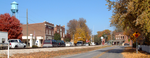
Battle Ground is a town in Tippecanoe Township, Tippecanoe County in the U.S. state of Indiana. The population was 1,334 at the 2010 census. It is near the site of the Battle of Tippecanoe. Battle Ground is part of the Lafayette, Indiana, Metropolitan Statistical Area.

Excerpt from the Wikipedia article Battle Ground, Indiana (License: CC BY-SA 3.0, Authors, Images).

Battle Ground, Indiana
Battleview Drive,

Geographical coordinates (GPS) Address Nearby Places
placeShow on map

Wikipedia: Battle Ground, IndianaContinue reading on Wikipedia

Geographical coordinates (GPS)

Latitude Longitude
N 40.504444444444 ° E -86.857777777778 °
placeShow on map

Address

Battleview Drive 6023
47906
Indiana, United States
mapOpen on Google Maps

Tippecanoe County Indiana Incorporated and Unincorporated areas Battle Ground Highlighted 1803718
Share experience

Nearby Places

Tippecanoe Battlefield Park

The Tippecanoe Battlefield Park preserves the location of the Battle of Tippecanoe fought on November 7, 1811. The 16-acre (6.5 ha) site of the battle was deeded to the State of Indiana by John Tipton, a veteran of the fight, on November 7, 1836, the twenty-fifth anniversary of the battle. The site was used for a number of major political rallies during its earlier years, those most significant being on May 29, 1840 in favor of William Henry Harrison's bid for the White House attended by 30,000 people.The location was attracting visitors by the 1850s, and the battlefield was bordered by the Louisville, New Albany, & Salem Railroad during that decade. A refreshment stand was built adjacent to the site to accommodate visitors, and this land was later purchased by the Northwest Indiana Conference of the Methodist Church and used for the Battle Ground Collegiate Institute and later for a Methodist youth camp. Despite interest in the location for the sesquicentennial of the battle in 1961, the camp was abandoned in 1971 and the location was neglected. It was designated a National Historical Landmark in 1960. It is located in the Battle Ground Historic District. Local residents acquired the Methodist property upon its closure, and created a museum in the camp's lodge. The citizen's group merged with the Tippecanoe County Historical Association in 1990 which took over operation of the museum. The museum was extensively renovated in 1995. The Battlefield Monument was ceded to the Tippecanoe County Park Board in 1972.

Battle of Tippecanoe

The Battle of Tippecanoe ( TIP-ee-kə-NOO) was fought on November 7, 1811, in Battle Ground, Indiana, between American forces led by then Governor William Henry Harrison of the Indiana Territory and tribal forces associated with Shawnee leader Tecumseh and his brother Tenskwatawa (commonly known as "The Prophet"), leaders of a confederacy of various tribes who opposed European-American settlement of the American frontier. As tensions and violence increased, Governor Harrison marched with an army of about 1,000 men to attack the confederacy's headquarters at Prophetstown, near the confluence of the Tippecanoe River and the Wabash River. Tecumseh was not yet ready to oppose the United States by force and was away recruiting allies when Harrison's army arrived. Tenskwatawa was a spiritual leader but not a military man, and he was in charge. Harrison camped near Prophetstown on November 6 and arranged to meet with Tenskwatawa the following day. Early the next morning warriors from Prophetstown attacked Harrison's army. They took the army by surprise, but Harrison and his men stood their ground for more than two hours. After the battle, Harrison's men burned Prophetstown to the ground, destroying the food supplies stored for the winter. The soldiers then returned to their homes. Harrison accomplished his goal of destroying Prophetstown. The win proved decisive and garnered Harrison the nickname of "Tippecanoe". Meanwhile, the defeat dealt a fatal blow for Tecumseh's confederacy and, though comeback attempts were made, it never fully recovered. So popular was Harrison’s nickname that the Whigs turned "Tippecanoe and Tyler too" into the slogan and a popular song for Harrison and his running mate John Tyler's 1840 presidential campaign.