place

Midway Point, Tasmania

Localities of Sorell CouncilSouth-east area council geography stubsSuburbs of HobartTowns in TasmaniaUse Australian English from August 2019
Midway Point Aerial
Midway Point Aerial

Midway Point is a residential locality in the local government area (LGA) of Sorell in the South-east LGA region of Tasmania. The locality is about 5 kilometres (3.1 mi) south-west of the town of Sorell. The 2016 census recorded a population of 2859 for the state suburb of Midway Point. It is located on a small peninsula with Orielton Lagoon on its eastern side and Pittwater on its southern and western sides. The suburb meets the mid-way point of the Sorell Causeway from Hobart to Sorell, hence the name. Mcgees Bridge is connected to Midway Point on the Pittwater side. The suburb lies close to Hobart International Airport and is approximately 21 km to Hobart via the Tasman Highway. In recent years Midway Point has become a popular commuter town for people working in Hobart.

Excerpt from the Wikipedia article Midway Point, Tasmania (License: CC BY-SA 3.0, Authors, Images).

Midway Point, Tasmania
Penna Road, Hobart Midway Point

Geographical coordinates (GPS) Address Nearby Places
placeShow on map

Wikipedia: Midway Point, TasmaniaContinue reading on Wikipedia

Geographical coordinates (GPS)

Latitude Longitude
N -42.803333333333 ° E 147.5325 °
placeShow on map

Address

Penna Road

Penna Road
7171 Hobart, Midway Point
Tasmania, Australia
mapOpen on Google Maps

Midway Point Aerial
Midway Point Aerial
Share experience

Nearby Places

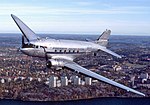
1946 Australian National Airways DC-3 crash

On Sunday 10 March 1946 a Douglas DC-3 aircraft departed from Hobart, Tasmania for a flight to Melbourne. The aircraft crashed into the sea with both engines operating less than 2 minutes after takeoff. All twenty-five people on board the aircraft died. It was Australia's worst civil aviation accident at the time.An investigation panel was promptly established to investigate the accident. The panel was unable to conclusively establish the cause but it decided the most likely cause was that the automatic pilot was inadvertently engaged shortly after takeoff while the gyroscope was caged. The Department of Civil Aviation took action to ensure that operation of the automatic pilot on-off control on Douglas DC-3 aircraft was made distinctive from operation of any other control in the cockpit, and that instructions were issued impressing on pilots that gyroscopes should be un-caged prior to takeoff. An inquiry chaired by a Supreme Court judge closely examined three different theories but found there was insufficient evidence to determine any one of them as the cause. This inquiry discovered that the captain of the aircraft was diabetic and had kept it secret from both his employer and the Department of Civil Aviation. The judge considered the captain's diabetes and self-administration of insulin probably contributed significantly to the accident but he stopped short of making this his official conclusion. In his report, the judge recommended modification of the lever actuating the automatic pilot. The inquiry uncovered four irregularities in the regulation of civil aviation in Australia and the judge made four recommendations to deal with these irregularities.