The Oklahoma City bombing was a domestic terrorist truck bombing of the Alfred P. Murrah Federal Building in Oklahoma City, Oklahoma, United States, on April 19, 1995. Perpetrated by two anti-government extremists with white supremacist, right-wing terrorist sympathies, Timothy McVeigh and Terry Nichols, the bombing happened at 9:02 a.m. and killed at least 168 people, injured more than 680 others, and destroyed more than one-third of the building, which had to be demolished. The blast destroyed or damaged 324 other buildings within a 16-block radius, shattered glass in 258 nearby buildings, and destroyed or burned 86 cars, causing an estimated $652 million worth of damage. Local, state, federal, and worldwide agencies engaged in extensive rescue efforts in the wake of the bombing. The Federal Emergency Management Agency (FEMA) activated 11 of its Urban Search and Rescue Task Forces, consisting of 665 rescue workers who assisted in rescue and recovery operations. The Oklahoma City bombing remains the deadliest act of domestic terrorism in U.S. history.
Within 90 minutes of the explosion, McVeigh was stopped by Oklahoma Highway Patrolman Charlie Hanger for driving without a license plate and arrested for illegal weapons possession. Forensic evidence quickly linked McVeigh and Nichols to the attack; Nichols was arrested, and within days, both were charged. Michael and Lori Fortier were later identified as accomplices. McVeigh, a veteran of the Gulf War and a sympathizer with the U.S. militia movement, had detonated a Ryder rental truck full of explosives he parked in front of the building. Nichols had assisted with the bomb's preparation. Motivated by his dislike for the U.S. federal government and unhappy about its handling of the Ruby Ridge incident in 1992 and the Waco siege in 1993, McVeigh timed his attack to coincide with the second anniversary of the fire that ended the siege at the Branch Davidian compound in Waco, Texas.The official FBI investigation, known as "OKBOMB", involved 28,000 interviews, 3.5 short tons (3,200 kg) of evidence and nearly one billion pieces of information. When the FBI raided McVeigh's home, it found a single telephone number in the phone book. The FBI traced the number to a home where there was a family. The FBI interviewed the homeowner and found that the homeowner shared a phone number with a farm a few hours away where McVeigh bought the supplies for the bombing. The bombers were tried and convicted in 1997. Sentenced to death, McVeigh was executed by lethal injection on June 11, 2001, at the U.S. federal penitentiary in Terre Haute, Indiana. Nichols was sentenced to life in prison in 2004. Michael and Lori Fortier testified against McVeigh and Nichols; Michael Fortier was sentenced to 12 years in prison for failing to warn the United States government, and Lori received immunity from prosecution in exchange for her testimony.
In response to the bombing, the U.S. Congress passed the Antiterrorism and Effective Death Penalty Act of 1996, which tightened the standards for habeas corpus in the United States. It also passed legislation to increase the protection around federal buildings to deter future terrorist attacks.
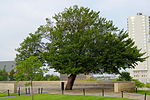
On April 19, 2000, the Oklahoma City National Memorial was dedicated on the site of the Murrah Federal Building, commemorating the victims of the bombing. Remembrance services are held every year on April 19, at the time of the explosion.

 Continue reading on Wikipedia