place

Mary Jane Ross

1827 births1908 deaths19th-century Native American women20th-century Native AmericansCherokee Nation in the American Civil War
Cherokee Nation people (1794–1907)Cherokee Nation writersNative American people from TennesseePeople of Indian Territory in the American Civil War
Mary Jane Ross (1827 1908)

Mary Jane "Mollie" Ross (November 5, 1827 - Jul 29, 1908) was born in Tennessee to the most prominent Cherokee family of the nineteenth century. The Ross family led the Cherokee Nation through some of its most tumultuous historical events, including the Trail of Tears and the American Civil War. Ross was the daughter of Lewis Ross (1796-1871) and Francis "Fannie" (Holt) Ross (1789-1860). Her paternal uncle John Ross was principal chief of the Cherokee Nation from 1828 until his death in 1866. Her father, Lewis Ross, was a merchant, planter, and Treasurer of the Cherokee Nation. She had the following ten siblings: Minerva A., John McDonald, Araminta, Robert Daniel, Amanda Melvina, Henry Clay, Sarah, Helen, Jack Spears, and Sarah Elizabeth Ross. Born to affluence and a would-be domestic life of leisure, Ross excelled in her studies, was a talented musician, contributed to the support and aid of Cherokee orphans after the Civil War, and endured a life uprooted by the forced removal of the Cherokee people on the Trail of Tears, followed by the hardships of the Civil War. Upon her husband's death, Ross took up the work of authoring and editing large portions of his biography which she submitted for publication to the Library of Congress.

Excerpt from the Wikipedia article Mary Jane Ross (License: CC BY-SA 3.0, Authors, Images).

Mary Jane Ross
East Murrel Road,

Geographical coordinates (GPS) Address Nearby Places
placeShow on map

Wikipedia: Mary Jane RossContinue reading on Wikipedia

Geographical coordinates (GPS)

Latitude Longitude
N 35.855833333333 ° E -94.958888888889 °
placeShow on map

Address

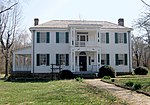
Hunter's Home (Murrell Home)

East Murrel Road 19479
74465
Oklahoma, United States
mapOpen on Google Maps

Mary Jane Ross (1827 1908)
Share experience

Nearby Places

Cherokee Nation (1794–1907)

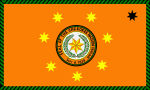
The Cherokee Nation (Cherokee: ᏣᎳᎩᎯ ᎠᏰᎵ, pronounced Tsalagihi Ayeli) was a legal, autonomous, tribal government in North America recognized from 1794 to 1907. It was often referred to simply as "The Nation" by its inhabitants. The government was effectively disbanded in 1907, after its land rights had been extinguished, prior to the admission of Oklahoma as a state. During the late 20th century, the Cherokee people reorganized, instituting a government with sovereign jurisdiction known as the Cherokee Nation. On July 9, 2020, the United States Supreme Court ruled that the Muscogee (Creek) Nation (and by extension the Cherokee Nation) had never been disestablished in the years before allotment and Oklahoma Statehood. The Cherokee Nation consisted of the Cherokee (ᏣᎳᎩ —pronounced Tsalagi or Cha-la-gee) people of the Qualla Boundary and the southeastern United States; those who relocated voluntarily from the southeastern United States to the Indian Territory (circa 1820 —known as the "Old Settlers"); those who were forced by the Federal government of the United States to relocate (through the Indian Removal Act) by way of the Trail of Tears (1830s); and descendants of the Natchez, the Lenape and the Shawnee peoples, and, after the Civil War and emancipation of slaves, Cherokee Freedmen and their descendants. The nation was recognized as a sovereign government; because the majority of its leaders allied with the Confederacy, the United States required a new peace treaty after the American Civil War, which also provided for emancipation of Cherokee slaves. The territory was partially occupied by United States. In the late 19th century, Congress passed the Dawes Act, intended to promote assimilation and extinguish Indian governments and land claims in preparation for the admission of Oklahoma as a state in 1907. After allotment of lands to households, all the Cherokee were considered state and United States citizens.