place

Quidi Vidi Brewing Company

Beer and brewery stubsBreweries in CanadaCompanies based in St. John's, Newfoundland and LabradorCuisine of Newfoundland and Labrador
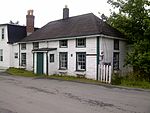
2017 10 08 03 Quidi Vidi Brewing Company, north of St. John's, NL Canada

Quidi Vidi Brewing Company is a craft brewery in Quidi Vidi village, a neighbourhood of St. John's, Newfoundland and Labrador, Canada. Founded in 1996 by David Fong in a former fish plant, the brewery is an important tourist destination. Currently, over 25 different brews are offered year round; including the famous blue bottled Iceberg Beer, which is made with 20,000 year old iceberg water which is harvested from icebergs off the coast of Newfoundland.Quidi Vidi Brewery is the third-largest brewer in the province of Newfoundland and Labrador, after Labatt and Molson. Its products are available province-wide in liquor stores, corner stores and on draft. Quidi Vidi Brewery’s beer can also be found in other provinces across Canada like Nova Scotia, Prince Edward Island, Manitoba, Saskatchewan, and Alberta.

Excerpt from the Wikipedia article Quidi Vidi Brewing Company (License: CC BY-SA 3.0, Authors, Images).

Quidi Vidi Brewing Company
Barrows Road, St. John's

Geographical coordinates (GPS) Address Nearby Places
placeShow on map

Wikipedia: Quidi Vidi Brewing CompanyContinue reading on Wikipedia

Geographical coordinates (GPS)

Latitude Longitude
N 47.581455 ° E -52.676228 °
placeShow on map

Address

Barrows Road
A1C 5X1 St. John's
Newfoundland and Labrador, Canada
mapOpen on Google Maps

2017 10 08 03 Quidi Vidi Brewing Company, north of St. John's, NL Canada
Share experience

Nearby Places

Pleasantville, St. John's

The neighbourhood of Pleasantville in St. John's, Newfoundland and Labrador is located in the east end of the city, directly north of the downtown. The neighbourhood extends from the north side of Quidi Vidi Lake northward to Newfoundland Drive, and is largely made up of apartment blocks. A cricket field near Quidi Vidi Lake in Pleasantville served as a military training camp for the Blue Puttees of the Newfoundland Regiment during the month of September 1914, before troops left St. John's on the SS Florizel. In addition, the men practiced skirmishes in an area just east of Quidi Vidi, known as White Hills.Pleasantville is home to a reserve base of the Canadian Forces and the Country Ribbon meat processing plant, as well as the former site of the Janeway Children's Hospital, now demolished. It includes Bally Haly Country Club. Most of the area was developed by the United States Military in 1941 and is the former site of Fort Pepperrell, later Pepperrell Air Force Base. The base closed in 1960, and in 1961 the land was transferred to the Canadian Government for use by the Department of National Defence. Many of the buildings the US Military constructed in the area have since been either demolished or turned into government offices or residential units. The former American junior and senior high school building, initially opened for the 1956-57 school year, has been converted into condominiums. Pleasantville is now being redeveloped by Canada Lands Company (CLC) into a residential neighbourhood.

The Narrows, St. John's

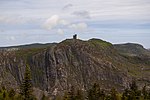
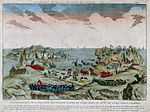
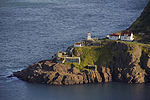
The Narrows, is the only passage from the Atlantic Ocean to St. John's Harbour, Newfoundland, bordered north and south by steep rock walls. A skilled captain is required to navigate large ships through the Narrows, known as “threading the eye of the needle”. The channel has a least depth of 11 metres and at its narrowest point near Chain Rock is 61 metres wide. From at least circa 1830, metal rings were set into the rock on either side of the Narrows so that boats could "warp in" and be hauled along to clear the cliffs and dangerous rocks in the water. In 1855, work began to blast away the submerged top of the Merlin Rock to make a safer passage for steam ships.The Narrows has served an important defense of the city of St. John’s from early pirates and settlers in 1655 to World War II. In 1655 vice admiral Christopher Martin erected a fort on the south side to prevent privateers and enemy vessels from entering the port. In the mid 17th century, fortifications, known as Signal Hill, were built on a north-side hill, affording a view of the Narrows and the harbor. In 1763 Fort Amherst was built in the same area. In the late 18th century a defensive chain was erected across the narrows from Chain Rock to Pancake Rock which could be raised in the event of enemy ships advancing into the harbour. During World War II a steel mesh was installed to prevent enemy submarines from entering the harbor. The Fort Amherst Lighthouse, now a heritage site, was erected at South Head, at the entrance to the Narrows to guide approaching vessels.The south side of the Narrows was referred to as South Battery before 1800, then the residential fishing community was known as Southside East, and finally Fort Amherst, St. John's, which includes the historic lighthouse.