place

Zorge (Moscow Central Circle)

Moscow Central Circle stationsMoscow Metro stationsMoscow Metro stubsRailway stations in Russia opened in 2016Russian railway station stubs
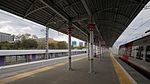
MCC 01 2017 img11 Zorge station

Zorge (Russian: Зорге) is a station on the Moscow Central Circle of the Moscow Metro. It became the 30th station on the line when it opened in November 2016.Zorge is near the Khodynskoye Pole area in northwestern Moscow. The station's name comes from the name of the street, Ulitsa Zorge, on which the station is situated. Ulitsa Zorge is named for Richard Sorge, a decorated Soviet intelligence officer who served in Nazi Germany and Japan.Zorg, as well as Panfilovskaya station to the north, provides an out-of-station transfer to Oktyabrskoye Pole station of Moscow Metro's Line 7.

Excerpt from the Wikipedia article Zorge (Moscow Central Circle) (License: CC BY-SA 3.0, Authors, Images).

Zorge (Moscow Central Circle)
проектируемый проезд № 1316, Moscow Khoroshyovo-Mnyovniki District

Geographical coordinates (GPS) Address Nearby Places
placeShow on map

Wikipedia: Zorge (Moscow Central Circle)Continue reading on Wikipedia

Geographical coordinates (GPS)

Latitude Longitude
N 55.7878 ° E 37.5045 °
placeShow on map

Address

Зорге

проектируемый проезд № 1316
123298 Moscow, Khoroshyovo-Mnyovniki District
Moscow, Russia
mapOpen on Google Maps

MCC 01 2017 img11 Zorge station
Share experience

Nearby Places

Sokol (settlement, Moscow)

Sokol (Russian: Сокол) also known as "artists' settlement" (Russian: посёлок художников)) is the first cooperative residential settlement in Moscow, founded in 1923. It is located in the Northern Administrative Okrug, not far from the later built Sokol metro station. The settlement "Sokol" became one of the embodiments of the garden city concept. Since 1979, the settlement has been under state protection as a monument to urban development of the first years of Soviet power. Since 1989, the settlement "Sokol" has been self-governing. The architects of the settlement "Sokol" implemented the concept of the "garden city", which was popular in the early 20th century. The idea of ​​a settlement that would combine the best features of the city and the village was put forward by the British Ebenezer Howard in 1898. As early as 1903, a project appeared to build a similar garden city on Khodynka Field in Moscow. This project was being developed for some time, but the events of 1914-1917 prevented its implementation. The urban development plans of the 1920s - "New Moscow" by Alexey Shchusev and "Greater Moscow" by Sergei Shestako - also widely used the idea of ​​a "garden city". The outskirts and suburbs of Moscow were supposed to be built up with settlements consisting of low-rise buildings, which were to have their own libraries, clubs, sports and children's playgrounds and kindergartens.