place

K. R. Market

Markets in IndiaRetail markets in IndiaShopping districts and streets in India
K.R. Market
K.R. Market

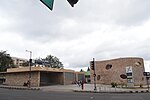
K R Market (Krishnarajendra Market), also known as City Market, is the largest wholesale market dealing with commodities in Bangalore, India. It is named after Krishnarajendra Wodeyar, a former ruler of the princely state of Mysore. The market is located in the Kalasipalya area, adjacent to the Tipu Sultan's Summer Palace, on Mysore Road at its junction with Krishnarajendra Road. It is the first locality in the whole of Asia to get electricity and considered to be one of the biggest flower markets in Asia.

Excerpt from the Wikipedia article K. R. Market (License: CC BY-SA 3.0, Authors, Images).

K. R. Market
Kalasipalya Main Road, Bengaluru Kalasipalya (South Zone)

Geographical coordinates (GPS) Address Nearby Places
placeShow on map

Wikipedia: K. R. MarketContinue reading on Wikipedia

Geographical coordinates (GPS)

Latitude Longitude
N 12.963611111111 ° E 77.5775 °
placeShow on map

Address

KR Market

Kalasipalya Main Road
560053 Bengaluru, Kalasipalya (South Zone)
Karnataka, India
mapOpen on Google Maps

K.R. Market
K.R. Market
Share experience

Nearby Places

Bengaluru Pete
Bengaluru Pete

Bengaluru Pete is the area of Bangalore city which was established by Kempegowda I (c. 1510–1570) in 1537 with roads laid out in the cardinal directions, and entrance gates at the end of each road. Kempegowda also termed the Pete he built as his "gandu bhoomi" or "Land of Heroes". Pete (Kannada: Market centre) forms a well–defined body of markets which were associated with various trades and professions of the populace in the locality markets and given the names of trades pursued in such markets. The well known markets are the Tharagupete–market for grains, the Balepete – for Bangles and musical instruments, the Chikkapete and the Nagarthpete for textile trade, the Ballapurpete and the Ganigarapete market where oil is extracted by people of the Ganiga community, the Tigalarapete–flower market of gardeners, the Cubbonpete – textile manufacture by people of the Devanga community.The Bengaluru Pete, established in 1537 around the Mud Fort, built by Kempe Gowda I as the nucleus, with an area of 2.24 square kilometres (1 sq mi), has expanded to the present sprawling city of 741 square kilometres (286 sq mi) embracing a multi ethnic population of 5.7 million; as per Census of India 2001, the present population is reported as 6.6 million (2007) and is thus known by the epithet "the Boom city". The other nicknames of the city also reflect the growth direction of the city, such as the Silicon Valley of India, the "Fashion Capital of India," and "The Pub City of India."The old Pete, structured in the contemporary style of deep networks of crowded streets, richly represented the multi cultural identity, social history, and economic geography of the times which are considered as a hallmark in the planning and design of any urban agglomerate. The place has left its mark on literature with novels like Riddle of the Seventh Stone being set in this part of Bangalore. These attributes have been further accentuated in the present day Bangalore city. It is now the third largest metropolis in India, the largest city in Karnataka state and the 28th largest city in the world.