place

Black Bridge (The Nilgiris)

Bridges in Tamil NaduBuildings and structures in Nilgiris districtUse Indian English from July 2020

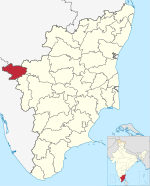
The Black Bridge (now the Manekshaw Bridge) is a historic bridge in Wellington, The Nilgiris District, India. At 43.5 metres long, the bridge spans across the Mynala stream, which joins the Coonoor River 2 kilometres downstream. The bridge connects Wellington Cantonment to the Ooty - Coonoor road (NH181). The bridge was constructed in 1858, but it collapsed before its completion. The bridge was constructed again in 1878 using wooden structures. It was christened the Waterloo Bridge, as the beginning of the Waterloo Road, which leads all the up to present-day Madras Regimental Centre. The bridge has locally been known as Black Bridge ever since, as the bridge was built of Burmese teak and was coated with black tar. In 2009, after the most recent reconstruction, the bridge is named "Manekshaw Bridge" in honour of the Late Field Marshal SHFJ Manekshaw, who had made Coonoor his final resting place. The bridge now sports a statue of the late Field Marshal at the confluence with NH 181.

Excerpt from the Wikipedia article Black Bridge (The Nilgiris) (License: CC BY-SA 3.0, Authors).

Black Bridge (The Nilgiris)

Geographical coordinates (GPS) Address Nearby Places
placeShow on map

Wikipedia: Black Bridge (The Nilgiris)Continue reading on Wikipedia

Geographical coordinates (GPS)

Latitude Longitude
N 11.3613659 ° E 76.7785289 °
placeShow on map

Address


643231 , Wellington Cantonment
Tamil Nadu, India
mapOpen on Google Maps

Share experience

Nearby Places

Wellington, Tamil Nadu

Wellington (Native name: Jakkatalla (Badaga)) is a town in the Nilgiris District of the Indian state of Tamil Nadu, located at three kilometres to the north of Coonoor on the NH-181. The town includes a Wellington Bazaar, and the Wellington Cantonment. The Wellington Cantonment is home to The Madras Regimental Centre (MRC) and The Defence Services Staff College (DSSC). The Nilgiri passenger train passes through Wellington, which also has a railway station. The settlement of Wellington lies immediately outside of Wellington Cantonment, which was earlier known as Jakkatalla (or Jacketallah) from the Badaga Village of that name to the north of it. In 1852, Sir Richard Armstrong, the then Commander-in-Chief, recommended that the name should be changed to Wellington in honour of the Iron Duke, who had previously evinced an interest in the establishment of a sanatorium in the Nilgiris. In 1860, Sir, Charles Trevelyan held that this interesting Military Establishment could not be connected with a more appropriate name than Wellington. He, therefore, ordered that Jakkatalla Station be called henceforth Wellington. The construction of the barracks began in 1852 and was completed in 1860, popularly known as Wellington Barracks. It assumed importance in the Station, and since February 1942 is occupied by the Madras Regimental Centre. The Wellington Barracks is now named as Srinagesh Barracks in memory of the First Indian Colonel of the Madras Regiment Gen. S.M.Srinagesh. The native Bazaar, now known as the Cantonment Market, is away from the Barracks and is on the other side of the stream after crossing the Waterloo Bridge (commonly known as Black Bridge, a tarred wooden construction, reconstructed in March 2009, and renamed as Manekshaw Bridge in memory of Field Marshal SHFJ Manekshaw) onto NH 181.