place

Vabamu Museum of Occupations and Freedom

2003 establishments in EstoniaCold War museumsCommemoration of communist crimesEstonia geography stubsHistory museums in Estonia
Kesklinn, TallinnMuseums established in 2003Museums in Tallinn

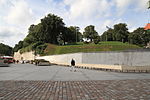
The Vabamu or Vabamu Museum of Occupations and Freedom (Estonian: Okupatsioonide ja vabaduse muuseum Vabamu) in Tallinn, Estonia, is located at the corner of Toompea St. and Kaarli Blvd. It was opened on July 1, 2003, and is dedicated to the 1940-1991 period in the history of Estonia, when the country was occupied by the Soviet Union, then Nazi Germany, and then again by the Soviet Union. During most of this time the country was known as the Estonian Soviet Socialist Republic. The museum is managed by the Kistler-Ritso Estonian Foundation. The foundation is named after Dr. Olga Kistler-Ritso, the founder, president, and financial supporter of the foundation. The members of the foundation started to collect articles for the museum and for historical study in 1999. Cooperation was set with Estonian International Commission for the Investigation of the Crimes Against Humanity, the Estonian State Commission on Examination of the Policies of Repression, Memento Association, the Research Centre of the Soviet Era in Estonia, as well as with the Russian Memorial Society dedicated to victims of Soviet repressions, and other organizations.

Excerpt from the Wikipedia article Vabamu Museum of Occupations and Freedom (License: CC BY-SA 3.0, Authors).

Vabamu Museum of Occupations and Freedom
Toompea, Tallinn Kesklinna linnaosa

Geographical coordinates (GPS) Address Nearby Places
placeShow on map

Wikipedia: Vabamu Museum of Occupations and FreedomContinue reading on Wikipedia

Geographical coordinates (GPS)

Latitude Longitude
N 59.432647222222 ° E 24.739430555556 °
placeShow on map

Address

Toompea 8/3
10142 Tallinn, Kesklinna linnaosa
Estonia
mapOpen on Google Maps

Share experience

Nearby Places

Charles's Church, Tallinn

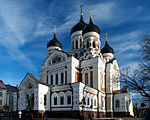
Charles's Church (Estonian: Kaarli kirik) is a Lutheran church in Tallinn, Estonia, built 1862–1870 to plans by Otto Pius Hippius. It is Tallinn's grandest 19th-century church.Tõnismägi hill has been the location of a chapel probably since the 14th century. In 1670, during the time of Swedish rule, the Swedish King Charles XI commissioned the construction of a church on the site, for the use of the Estonian and Finnish population of Tallinn (as opposed to the Baltic German population). The church was named after the king. In 1710, during the Great Northern War, this first wooden church was burnt down. In the 19th century, reconstruction plans were put forward. Donations of money were started in the 1850s, and the cornerstone of the new church was laid in 1862. The church, still incomplete, was inaugurated in 1870. The two towers on the west side were enlarged in 1882.The church is designed in the tradition of Western European Cathedrals, with two western towers flanking a rose window, and built in a Romanesque Revival style. The church has a Latin cross plan, and is in effect a hall church, the ceiling being held aloft without the use of pillars (according to a solution thought out by Hippius in collaboration with R. von Bernhardt). The apse is decorated by a fresco by Johann Köler, the first fresco in Estonia made by an ethnic Estonian. The church still houses the bells of the original, wooden church, cast in Stockholm in 1696.

Bronze Night
Bronze Night

The Bronze Night (Estonian: Pronksiöö), also known as the April Unrest (Aprillirahutused) and April Events (Aprillisündmused), refers to the riots in Estonia surrounding the controversial 2007 relocation of the Bronze Soldier of Tallinn, a Soviet World War II memorial in Tallinn.Many ethnic Estonians considered the Bronze Soldier in the city centre a symbol of Soviet occupation and repression. At the same time, the monument has significant symbolic value to Estonia's large ethnic Russian community, symbolising not only Soviet victory over Nazi Germany in World War II, but also their claim to equal rights in Estonia.Amid political controversy, in April 2007 the Government of Estonia started final preparations for the relocation of the statue and reburial of the associated remains, according to the political mandate received from the previous elections (held in March 2007). Disagreement over the appropriateness of the action led to mass protests and riots (accompanied by looting), lasting for two nights, the worst in Estonia since the Soviet reoccupation in 1944. During the riots, one Russian rioter was killed. In the early morning hours of April 27, 2007, after the first night's rioting, the Government of Estonia decided, at an emergency meeting, to relocate the monument immediately, referring to security concerns. By the following afternoon, the stone structure had been dismantled as well. As of the afternoon of April 30, the statue without the stone structure had been placed at the Defence Forces Cemetery of Tallinn. An opening ceremony for the relocated statue was held on May 8, VE Day. (Soviet Army veterans celebrate Victory Day a day later, on May 9.) During June 2007, the stone structure was rebuilt. Relatives have made claims to bodies of four of the war dead. Unclaimed remains were reburied at the military cemetery, next to the relocated monument, on July 3, 2007.