place

University of Lomé

1970s establishments in TogoBuildings and structures in LoméUniversities and colleges established in 1970Universities and colleges in Togo
University of Lomé entrance Mapillary (vZJS7Fs0LkiVS7sHBlVdtg)

The University of Lomé (French: Université de Lomé; abbreviated UL) is the largest university in Togo. Located in the city of Lomé, it was founded in 1970 as University of Benin (French: Université du Bénin) and changed its name to the University of Lomé in 2001.

Excerpt from the Wikipedia article University of Lomé (License: CC BY-SA 3.0, Authors, Images).

University of Lomé
Rue Hawola 75 BKK, Lomé Bè-Klikamé

Geographical coordinates (GPS) Address Nearby Places
placeShow on map

Wikipedia: University of LoméContinue reading on Wikipedia

Geographical coordinates (GPS)

Latitude Longitude
N 6.173669 ° E 1.215866 °
placeShow on map

Address

Université de Lomé

Rue Hawola 75 BKK
Lomé, Bè-Klikamé
Maritime Region, Togo
mapOpen on Google Maps

University of Lomé entrance Mapillary (vZJS7Fs0LkiVS7sHBlVdtg)
Share experience

Nearby Places

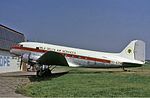
1974 Togo presidential C-47 crash

On 24 January 1974, a Togo Air Force Douglas C-47 Skytrain carrying several notable political figures crashed at an isolated location near the village of Sarakawa in northern Togo. Gnassingbé Eyadéma, the President of Togo, was on board the aircraft, which was flying from Lomé to his native village, Pya. As the C-47 descended for landing, it crashed near Sarakawa. Eyadéma survived, but his French pilot and all three other passengers died. Eyadéma claimed the aircraft had been sabotaged after he had reneged on an agreement with a French company over the use of a phosphate mine. Eyadéma attributed his survival to mystical powers and declared 24 January to be "Economic Liberation Day." Eyadéma even changed his first name from Étienne to Gnassingbé to remember the date of the day he survived the crash. Following the incident, a monument was established by the Togolese government near the crash site. The monument features a statue of Eyadéma standing on a plinth, flanked by images of his generals who died in the crash. Eyadéma was not the sole survivor of the crash, but he deliberately misrepresented the details of the accident to make himself look like a hero with superhuman strength who miraculously survived the disaster when everyone else was killed. Eyadéma claimed that the crash was not an accident but was a conspiracy to kill him, plotted by French imperialists who did not like his plan (announced on 10 January 1974) to nationalize the important phosphate mining company, the Togolese Mines Company of Benin (French: Compagnie Togolaise des Mines du Bénin (CTMB or Cotomib)). His C-47 was replaced by a new presidential jet, a Gulfstream II (registered as 5V-TAA) which was itself damaged beyond repair in a crash on 26 December of the same year, which killed three members of the crew, but which all three of the passengers on board survived. Eyadéma was not on board the jet at the time.